By Sylvia Regan
Research Paralegal
Our food system should nourish kids and make sure they grow up to be physically, mentally, and emotionally healthy. Children need healthy food to grow. They also need sufficient sleep, access to education, and responsible adults around them to keep them safe from dangerous situations and bad actors.
Unfortunately for the hundreds of thousands of kids who work in agriculture and food processing, the American food system is a source of harm, exhaustion, and exploitation. Agricultural and meatpacking jobs are some of the most dangerous and demanding jobs around. And yet Big Ag employs hundreds of thousands of children in the U.S.—some legally and other illegally—to keep their operations running. Children, often migrant children working to help feed their families, end up working instead of going to school, enduring horrific conditions at work, and often suffering gruesome injuries that will follow them throughout their lives.
Our government should work harder to protect kids. Child labor violations abound in the food system. Analysis by the Food & Environment Reporting Network of Department of Labor data from 2018 through 2022 found that out of 16,000 total violations, 12,000 child labor violations occurred in the food industry.
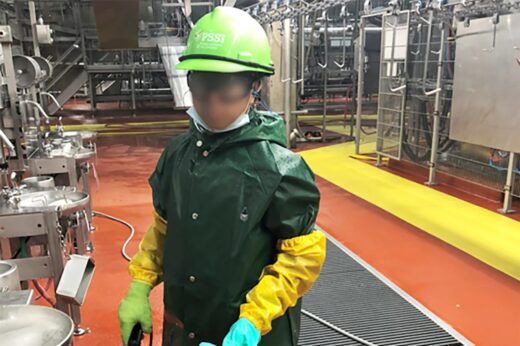
The Biden administration has ramped up investigations into child labor in food and other industries, but when violators are caught, the maximum fine of $15,000 per child is barely a slap on the wrist. And outside of meatpacking, the laws are actually written specifically to let children as young as 12 work in many agriculture jobs, even when they are too young to legally work other, less dangerous jobs.
This is a dangerous feature of agricultural exceptionalism going back to the New Deal, when F.D.R. struck a deal with Southern Democrats to exempt farmworkers and other predominantly Black workers from protective labor laws, allowing the southern plantation economy to continue to exploit Black workers.
Today, Big Ag continues to use agricultural exceptionalism to exploit communities of color, migrants, children, and other historically marginalized groups. The CAFO system—the industrial system of raising thousands of animals in close confinement—relies on cutting costs at any opportunity, especially labor costs. Since CAFOs and meatpacking plants are often sited in rural areas, and Big Ag has seriously contributed to diminishing job prospects in those rural communities, workers often don’t have other options for employment and may be more willing to accept poor and sometimes illegal working conditions.
Farmworkers and meatpacking workers, many of whom are undocumented or on restrictive visas, are particularly vulnerable to abuse from their employers and may fear retaliation for speaking up about violations, or not be aware of their rights.
Then in July 2023, a 16-year-old boy from Guatemala died on the job at a Mar-Jac plant in Mississippi. OSHA found the company directly responsible the death of Duvan Tomas Perez, who was a middle school student, but the company contests the conclusions. In a move that Big Ag loves to use to deflect blame, Mar-Jac claims that a third-party staffing company was responsible for verifying the child’s work eligibility. By using third-party companies to staff incredibly dangerous jobs, meat giants like JBS, Perdue, Cargill, and Seaboard can deny that they are responsible for employing hundreds of children when they get caught with kids cleaning their meat bandsaws.
In 2024, Mar-Jac Poultry is still shamelessly employing kids in their plants to do dangerous work. This time, the poultry company got caught employing four minors as young as 16 who they had directly hired. With no other company to blame, Mar-Jac’s lawyers have resorted to talking out of both sides of their mouth. Somehow, the company claims their policy is not to hire anyone under 18 and also that these four minors were lawfully employed to do specific tasks that are permissible for minors to perform in slaughterhouses. It’s clear that when there’s money to be made, Mar-Jac, like the other meatpacking companies that dominate our food system, cannot be trusted to follow the law and keep children safe.
Kids deserve better. Our government needs to prioritize child safety by enforcing existing labor laws and ending its policy of agricultural exceptionalism to instead rein in Big Ag. USDA must do more for workers and children. Last year, the USDA secretary sent a letter to the biggest meat producers in the country asking them to examine if there is illegal child labor in their supply chains and to consider stronger standards for their subcontractors. The shocking behavior by Mar-Jac and countless other examples show us that this approach is not enough. There is no question of “if.”
The current U.S. food system is built on the exploitation of workers. That’s why we fight in courtrooms and communities across the country for worker justice. Children, especially the migrant children that Big Ag depends so heavily on, are some of the most vulnerable and exploited members of our society. It is unacceptable that these Big Ag companies knowingly endanger kids in order to make their money. At FarmSTAND, we’re working with allies across the food system to transform our food system to put people ahead of profits. We’re fighting for a just future, where all our children can thrive.