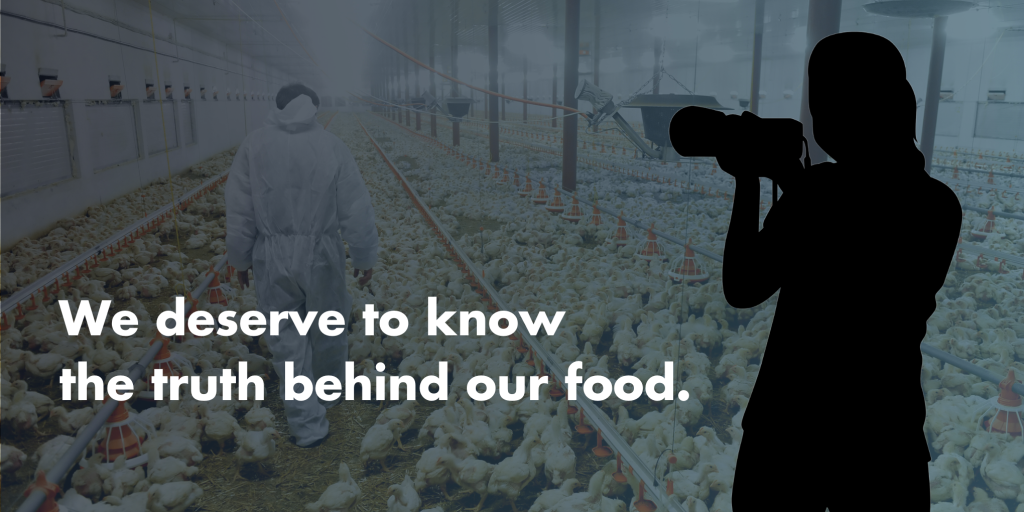
A just, healthy, and thriving food system requires transparency. Widely shared information about how our food is raised helps us hold corporations and government accountable. For example, investigations into animal treatment on factory farms have led to major policy reforms for animal handling.
However, since the 1990s, Big Ag has campaigned to pass “Ag-Gag” laws in states across the country – laws that penalize whistleblowers for exposing the worker, environmental, and animal abuse that happens behind the closed doors of factory farms and slaughterhouses. There’s a reason that the agriculture industry expends immense time and resources to pass Ag-Gag laws: to escape accountability. If the public and consumers knew the truth behind meat in the grocery store aisles, they would not stand for it.
FarmSTAND (formerly the Food Project at Public Justice) engages in litigation to strike down these unconstitutional and pernicious Ag-Gag laws that stand in the way of a just food system.
Click on the drop-down menu below to learn the basics behind each Ag-Gag law and what we’re doing to strike it down.
Ag-Gag laws, which are pushed by lobbyists for corporate agriculture companies, are an attempt to escape scrutiny over unsafe practices, environmental pollution, and worker and animal abuses. And they keep getting more dangerous: the latest crop of Ag-Gag laws passed in Iowa, Arkansas and North Carolina penalize whistleblowers in many industries beyond agriculture.
Workers at slaughterhouses, who are predominantly people of color and often undocumented, endure unsafe working conditions that can result in amputations, musculoskeletal injuries, and even death. Rural and environmental justice communities see excess manure from factory farms polluting their air and water. Animals in factory farms live dark, short lives cooped up in cages. Whistleblowers and union organizers must be allowed to expose these human rights and animal abuses for the benefit of consumers, workers, and rural communities alike.
But Ag-Gag laws threaten liability for those who record or publish evidence of these improper and often illegal practices, amounting to an attack on our constitutional right to free speech. Those who expose unsafe and abusive practices should not face penalties while the true culprits escape accountability.