El oscuro secreto del salmón de granja
Por Samantha Garfinkle
Becario legal
Summary:
- Industrial net-pen salmon farming pollutes the ocean, endangering native sea life and the livelihoods of small fisherfolk.
- Big Aquaculture is following the model of land-based Big Ag corporations. It drives out small producers, takes advantage of lax regulation, and misleads consumers to dominate the market.
- It’s not too late. We can stop Big Aquaculture before it dominates the U.S. seafood market.
A sustainable food system supports small fisherfolk, who are important to many communities’ economies and cultural heritage. These food producers understand and respect the limits of the sea and provide transparency to consumers on where their fish come from.
Unfortunately, both small fisherfolk and consumers are under attack by huge aquaculture corporations that farm fish like salmon on an industrial scale.
For decades, Big Ag has pushed out small farmers, lied to consumers, and destroyed the environment along the way. Now, Big Aqua — powerful aquaculture companies — has copied their playbook.
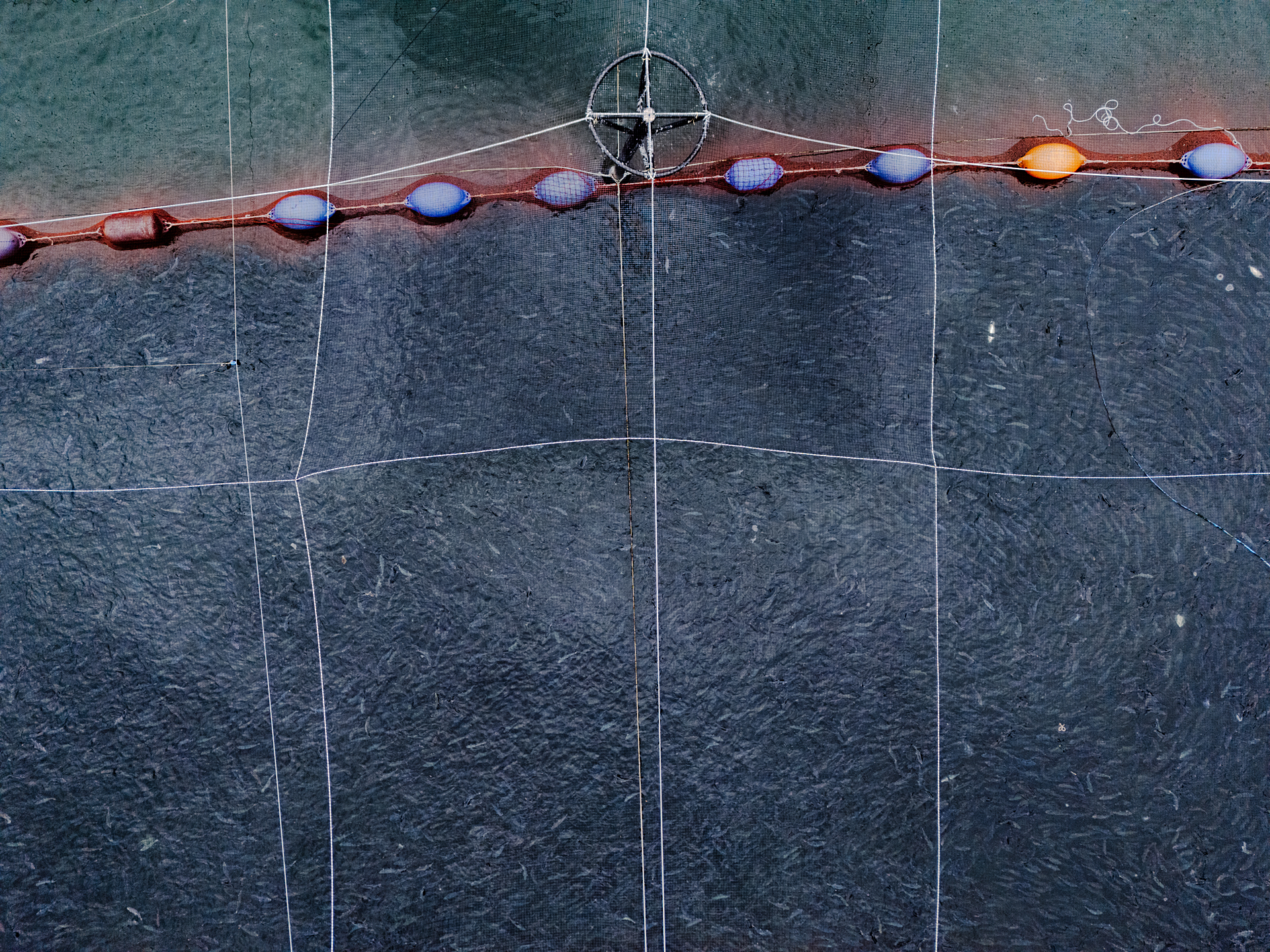
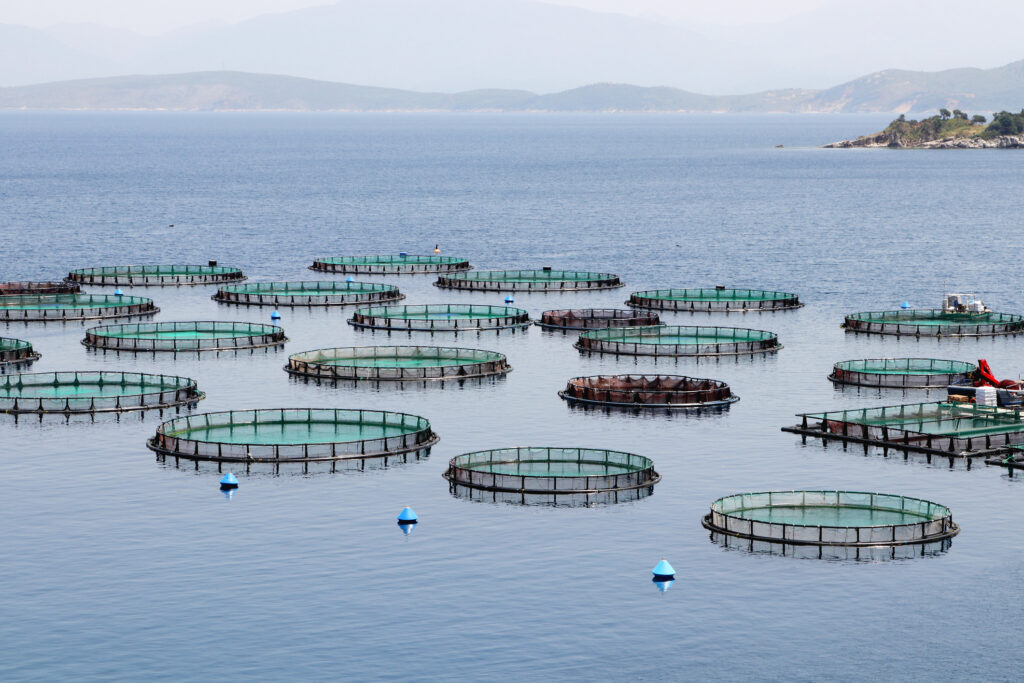
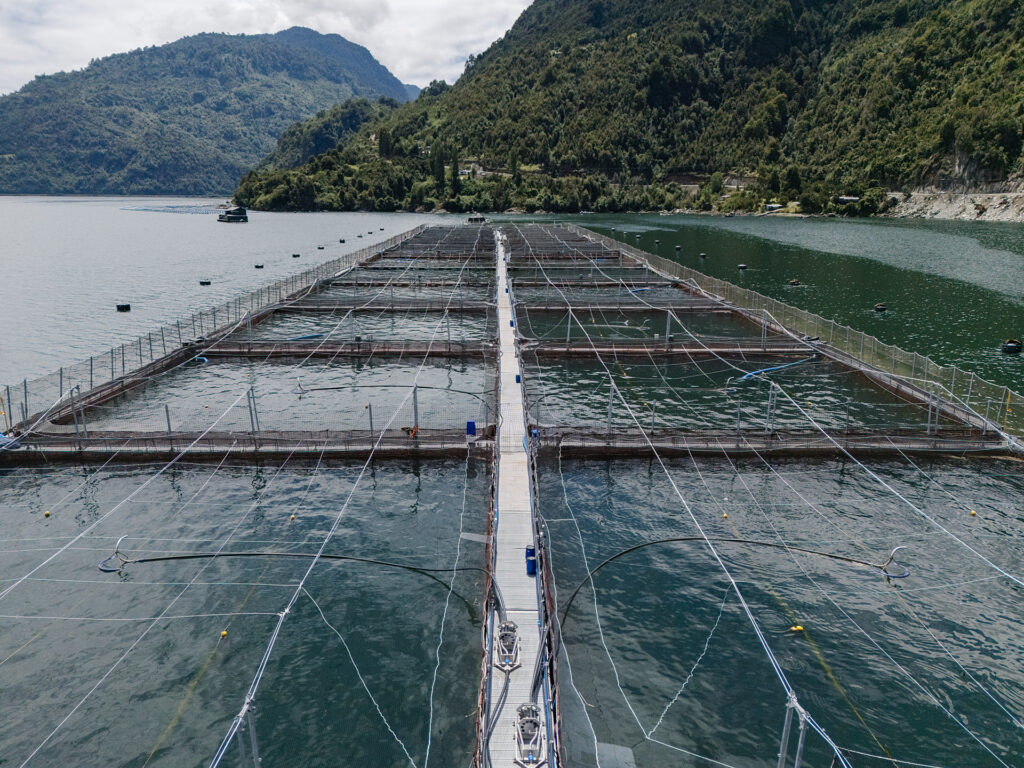
It’s a familiar story in corporate agriculture. First, aquaculture giants move into a rural area and build an operation several times larger than any that of any local fisherfolk. For example, salmon aquaculture companies build groups of underwater “net pens” along the coast. Each net pen spans the size of two to five basketball courts on the surface of the ocean and runs 100 feet deep. These pens are often closely grouped together. Each can contain tens of thousands of salmon. The corporations quickly scale up, grabbing hundreds of acres of coastline and selling their product at reduced rates to grab the market. Small fisherfolk are forced to choose between losing money by lowering prices or maintaining prices but losing market share.
Then, in addition to establishing a physical hold on the water, Big Aqua grabs local government power. It bends existing permit laws to allow for larger operations than ever before conceived, minimizing oversight. Laws that once supported small fisherfolk by balancing environmental protections and bureaucratic efficiency are now exploited by Big Aqua to grow unchecked.
Big Aqua, with no competition in the sea nor oversight by the government, then wreaks havoc on the ocean. The high concentration of fish creates a seabed sludge of feces and uneaten food beneath the net pens. This sludge is high in phosphorus and nitrogen and can deplete the available oxygen in the surrounding sea, killing native sea life.
Because the fish are so tightly packed, they are at high risk of diseases. Big Aqua compensates by dumping toxic pharmaceuticals in the water — many of which are harmful to native species, including the beloved Maine lobster. Any small fisherfolk that are left suffer reduced yields because the environment can no longer sustain its natural populations.
The net pens are prone to breakage — especially if wildlife like seals try to use the giant bag of fish as their next meal. If the net break is large enough, the salmon can escape. In places like Maine, that means the farmed fish can spread illnesses to genetically distinct native fish. In places like Chile, a net break means a carnivorous, invasive species is on the loose, permanently altering the ecosystem. Pieces of net, often left behind by companies, further pollute the shore.
For years, Big Aqua has built their consumer base by claiming farmed salmon is sustainable.
When consumers enter the supermarket, they’re often bombarded with messaging that farmed seafood is a sustainable choice. In some stores, like Hannaford, the store lumps all seafood together into “sustainable” and “locally sourced” bins, even if the fish comes from net-pens harming the ecologically sensitive Chilean Patagonia. When industrial aquaculture uses false and misleading claims to woo consumers, local fisherfolk who care about sustainability are completely unable to distinguish themselves.
So far in the U.S., Big Aqua hasn’t completely dominated the playing field. But that is the end goal of Big Aqua’s playbook. Examples around the world show us what U.S. fishers could face if Biq Aqua continues to consolidate its power. In countries such as Chile, Big Aqua has captured the labor of fisherfolk that they ran out of business, forcing them into dangerous working conditions. Divers, for example, are required to repair broken net pens at depths and times that far surpass safety limits. These divers can get nitrogen sickness that can chronically cause “bone rot,” paralysis, or death.
This nightmare is playing out across the world. Corporations like Australis Seafoods in Chile have taken over the seas, one farm at a time. In Maine, Cooke Aquaculture threatens to do the same. Cooke leases 640 acres (nearly the size of Central Park!) for the production of farmed salmon. That’s nearly three times the size of the next largest lessee. Maine’s state government has repeatedly ignored citizens’ complaints and approved the renewal of Cooke’s leases for decades to come.
But locals are fighting back. Protect Maine has championed local ordinances aimed at protecting coastal resources through common sense reporting requirements. That way, small fisherfolk are able to continue their sustainable businesses, while polluting corporations like Cooke are kept at bay. Protect Maine is also joining forces with local fisher and lobsterfolk to fight the renewal of Cooke’s salmon farm leases. And across the globe, communities are coordinating to empower local fights through collective action.
At FarmSTAND, we’re joining the fight to break up Big Aqua before it takes hold of U.S. seas.
In October, we sued the Hannaford grocery chain, which we allege participated in deceptive seafood marketing. Hannaford claims to sell local, sustainable seafood, but they are actually selling from the likes of Cooke Aquaculture and Australis Seafoods. We sued over salmon products from Australis, a Chilean salmon company, in a separate suit about alleged false sustainability claims earlier this year. We’re fighting the ongoing corporate consolidation in the seafood industry because consumers deserve to know what actually goes into their seafood, small fisherfolk deserve a fair chance at market, and we all deserve healthy seas!
Oceans are the latest battleground of Big Ag. We have the chance to stop Big Aqua before it destroys local economies and further damages the ecosystem.