Por Sylvia Regan
Paralegal de investigación
Eggs have been getting a lot of time in the spotlight lately. As egg prices continue to skyrocket in the early months of the second Trump administration, USDA Secretary Brooke Rollins has pledged that her $1 billion dollar plan will “combat avian flu and reduce egg prices.” We’re not so sure it will.
Fundamentally, the Trump admin is trying to treat one symptom of the bird flu outbreak (expensive eggs) while further cementing the system that breeds the disease — industrial factory farming.
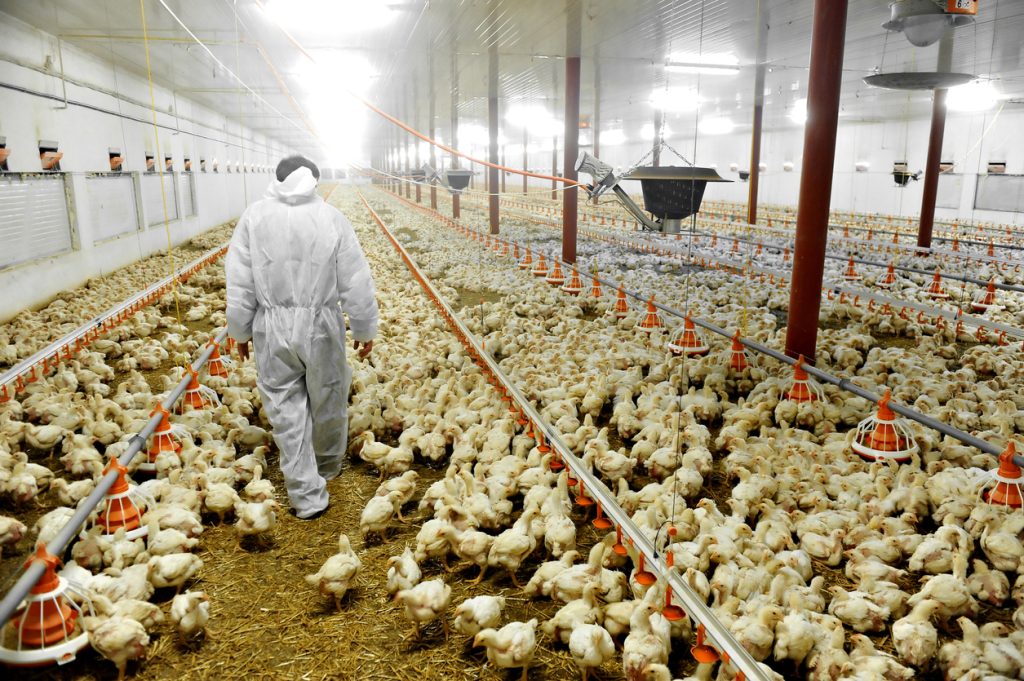
Most chickens that we eat or that lay the eggs we eat come from factory farms. These facilities are petri dishes for illness, cramming hundreds of thousands, sometimes millions, of animals with weak immune systems into tight, dark buildings where germs spread like wildfire. For the most part, the US government has left handling bird flu to the very companies that created this unhealthy system. Unsurprisingly, Rollins’ new plan is more of the same.
The Trump plan
The headline of the plan is that the government has promised $1 billion to address avian flu. Rollins calls this plan “comprehensive,” yet several major bird flu issues are noticeably absent. The plan doesn’t mention humans getting sick or the virus’s unprecedented spread to dairy cows across the country at all. (It also doesn’t address how USDA will achieve their goals when DOGE accidentally fired many of their bird flu experts.)
So what does the plan say about bird flu? First, it pledges up to $500 million towards increasing what industry likes to call “biosecurity,” trying to keep farmed birds from being exposed to the virus by humans or equipment moving between flocks or wild birds. It also dedicates up to $400 million to pay for the costs of replacing flocks that are culled during outbreaks.
When bird flu is detected in a flock of birds, the entire flock, sick and healthy birds alike, is killed to prevent the flu from spreading further. Sometimes several million birds are culled at once. Since this outbreak started, more than 166 million commercial birds have been killed due to bird flu.
To help lessen the financial blow when flocks are killed, the US government pays companies for the lost birds. By doing this, the government perversely encourages industrial chicken and egg companies to keep their chickens in unsafe, inhumane conditions. After all, why not keep animals in these disease factories, if the companies aren’t paying for the consequences? And it is the largest poultry companies that benefit most from USDA’s payments. Half of all payments go to only 10 companies, with one company that supplies McDonalds taking home 10% of all payments.
A surprising part of USDA’s plan on bird flu is the goal to invest up to $100 million to pursue vaccines and other methods to reduce bird flu. Vaccines could help to contain the spread of disease and reduce the need to cull so many birds.
But this idea has already met a lot of resistance, including from within the Trump administration. Health and Human Services Secretary Robert F. Kennedy, Jr., has voiced his opinion that bird flu vaccines might “backfire,” ignoring experts and instead suggesting an extremely dangerous approach of letting the flu run through flocks.
Only weeks after releasing this plan, Rollins said she agrees with Kennedy’s approach on bird flu and vaccines and that USDA will be “moving forward together” with HHS. How can an administration with no clear, science-based stance on whether animals should be vaccinated truly lead a response to a virus that continues to tear through animal populations?
Meanwhile, the powerful broiler (meat) chicken industry staunchly opposes vaccinating any poultry because they say it will wreck their export market, since many countries won’t accept chicken imports from countries that use the vaccine, even if only in egg-laying birds. It will be interesting to see if any progress on vaccination can be made, between the Trump administration’s tendency to put politics before science and Big Ag’s unwillingness to make changes that could hurt their profits.
Trying to shut down safer animal ag
There is one aspect of Rollins’ plan that is sure to make Big Ag happy. Under the pretense of a bird flu response, USDA’s new plan takes aim at “regulatory burdens” as a cause for high prices.
It’s clearly a dig at California’s Proposition 12, a citizen-passed law that, among other things, requires that egg-laying hens are given at least one square foot of floor space each. Proposition 12 was a major step forward for animal welfare and for worker safety and public health, since intensive confinement breeds dangerous diseases that can spread from animals to workers and their communities.
Big meat corporations have been trying to overturn Prop 12 since it passed. They tried, and failed, to get the U.S. Supreme Court to overturn it and now are hoping Congress will repeal it in the next farm bill. It now seems that corporate meat and egg titans can also count on Trump’s USDA to parrot their talking points and blame regulation for everything to justify dangerous deregulation. Trump’s previous deregulatory actions boosted the huge corporations that control our food system, letting them cut corners to squeeze out more profit, and hurt workers, animals, and consumers.
Corporate consolidation driving high costs and public health risks
Really, our government officials should be looking into another possible villain behind high egg prices. Not regulation, but the under-regulated companies that control the egg market. A new report from Food & Water Watch suggests that egg companies are taking advantage of the bird flu outbreak to hike prices even higher. Cal-Maine, which controls one fifth of the nation’s egg supply, had no bird flu outbreaks in 2023 but still raised prices, raking in more than $1 billion in additional profits that year.
Corporate consolidation is bad for chickens and bad for consumers. Five companies control almost half of all egg production in this country. This handful of powerful corporations has an unfair amount of control over the whole system, making it hard for smaller, independent egg farmers to compete. Our government should be working to uplift independent farmers who are producing food in ways that are safer for animal and human health, instead of doubling down on policies that make the richest companies richer.
This woeful plan makes it clear that the bold change we need is not going to come from the top. That’s why FarmSTAND is invested in a movement for transformational change.
We’re fighting in courtrooms and communities to dismantle the corporate-controlled food system and build a better system that puts the wellness of humans, animals, and the planet first. Learn more about our approach here. To hear the latest updates in the fight, sign up to receive our emails.