
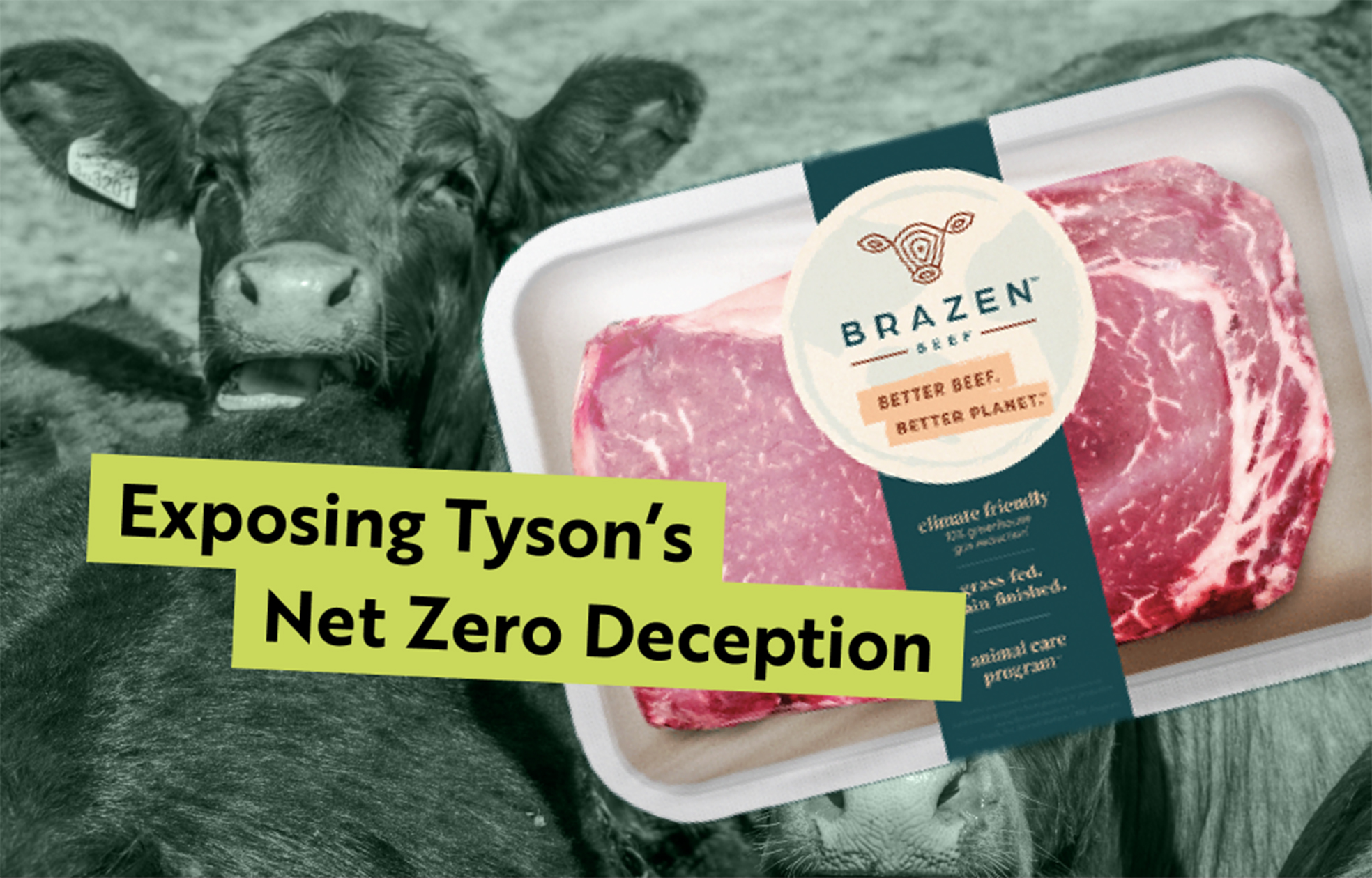
Los consumidores se preocupan por el medio ambiente. Las grandes empresas cárnicas solo se preocupan por sus beneficios.
La mayoría de la gente quiere comer alimentos que sean buenos para ella y para el planeta. A medida que aumenta la conciencia sobre la crisis climática, los consumidores se preocupan cada vez más por elegir alimentos sostenibles. Pero muchos consumidores no tienen una comprensión completa de lo dañina que es, en particular, la producción industrial de carne para el clima.
Los consumidores conscientes del impacto climático quieren comprar alimentos que sean más respetuosos con el planeta. Incluso están dispuestos a pagar más por alimentos que se adecuen a sus valores. Sin embargo, conocer realmente qué alimentos son mejores no es tarea fácil. Muchos consumidores se basan en las etiquetas y la información que se encuentra en el empaque de los alimentos, como las afirmaciones de que un producto genera menos emisiones de gases de efecto invernadero, para determinar si un alimento es respetuoso con el clima.
Tyson Foods produce más de 20% tipos de carne de vacuno, cerdo y pollo en los Estados Unidos. Según estimaciones externas, sus emisiones climáticas son mayores que las de países enteros, como Austria y Grecia. Pero Tyson sabía de las preferencias de los consumidores por alimentos sostenibles y buscó aprovechar la situación. Tyson comenzó a promocionar de manera engañosa la “carne climáticamente inteligente” y afirmó que podría alcanzar las emisiones “netas cero” para 2050. En FarmSTAND, nuestros sentidos comenzaron a alertarnos sobre el lavado de cara. Nuestro equipo revisó los documentos y las divulgaciones públicas de Tyson para descubrir la verdad. Cuando miramos detrás de la cortina, encontramos pruebas de que Tyson no estaba reformando sus prácticas para combatir el cambio climático; estaba haciendo una estrategia de marketing verde para aumentar sus beneficios.
En las revelaciones públicas de Tyson, encontramos pruebas de que este sabía que los consumidores concienciados con el medio ambiente pagaban más por la carne de vacuno que creían que era mejor para el medio ambiente. También sabía que los consumidores estarían cautelosos ante los impactos climáticos de sus productos cárnicos industriales. Si Tyson no lograba reducir sus enormes emisiones, o no lograba convencer a los consumidores de que lo hacía, eso podría perjudicar las ventas de la empresa. Tyson no puede permitirse que los consumidores bien informados vean a la compañía como el villano climático que es.
Los compradores de productos de alimentación que quieren hacer elecciones sostenibles son vulnerables a afirmaciones engañosas de empresas como Tyson. Esto se debe a que la población no tiene una comprensión adecuada de los impactos climáticos de la carne industrialmente criada. Las grandes empresas de carne quieren mantener la situación tal como está.
En FarmSTAND tomamos medidas para impedir que Tyson explotara a los consumidores con buenas intenciones. Juntos con nuestros aliados de Fondo de Defensa Legal de los Animales, Earthjustice, y Edelson PC, representamos a Grupo de Trabajo sobre Medio Ambiente intentará demandar a Tyson por sus afirmaciones engañosas.
Para presentar nuestra histórica demanda contra Tyson, analizamos su publicidad y la comparamos con los hechos. Construimos un caso que demostraba que todo era demasiado bueno para ser verdad. Al final, conseguimos un acuerdo histórico mediante el cual Tyson se comprometió a no hacer estas afirmaciones a menos que puedan respaldarlas con pruebas científicas sólidas.
Ahora publicamos esta última entrega de nuestra serie Deep Dive para que todos puedan ver cómo se comparan las afirmaciones de Tyson con la realidad. Haga clic en las secciones siguientes para obtener más información.
Tyson quería que los consumidores creyeran que sus productos eran buenos para el clima y el medio ambiente. La opinión pública estaba cada vez más concienciada sobre los impactos climáticos de la alimentación. Fabricar una fachada “amigable con el clima” ayudaría a este gigante de la industria cárnica a retener a los clientes existentes. Al revisar las declaraciones públicas de Tyson, descubrimos que la compañía sabía que algunos clientes incluso pagaban un precio más alto por comprar productos cárnicos que creían que eran buenos para el planeta.
En los documentos presentados por Tyson para divulgar sus emisiones de gases de efecto invernadero y sus planes, la compañía explicó francamente que estaba respondiendo a la demanda de los clientes de que Tyson sea ’un líder en la ambición climática“. Tyson afirmó claramente que necesitaba sus iniciativas climáticas para ”garantizar que podamos mantener la demanda de los consumidores“.”
Y, en un informe al SEC, Tyson expuso su verdadero temor: podría generar “publicidad negativa” debido a sus impactos climáticos, lo que perjudicaría sus ventas.
Ante la realidad de que los clientes no quieren comprar alimentos que contribuyen a la crisis climática, Tyson intentó convencer al público de que era uno de los buenos.
Tyson hizo una promesa de cero emisiones que nunca podría cumplir
En 2021, Tyson hizo un anuncio con mucha pompa: había fijado como objetivo alcanzar la neutralidad de emisiones de gases de efecto invernadero para 2050.
En el Anuncio de comunicado de prensa, Tyson intentó posicionarse como líder en materia de clima. Destacó “el compromiso de la empresa de ayudar a combatir la urgencia de la creciente crisis del cambio climático”. El CEO de Tyson prometió que la compañía se convertiría en “la compañía alimentaria más transparente y sostenible del mundo”.”
El anuncio fue seguido de una enorme campaña publicitaria y mediática.

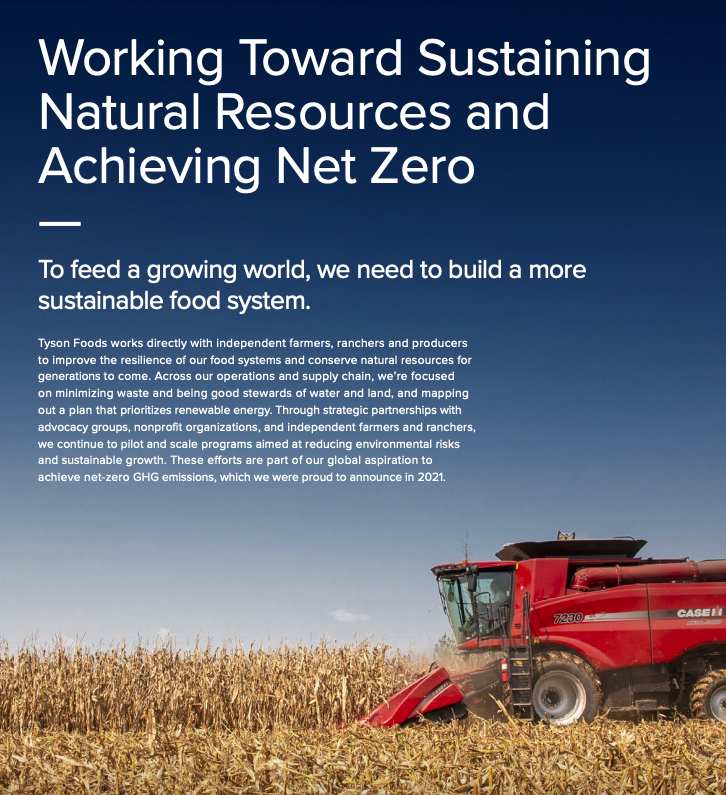
Si solo conocieras a Tyson por sus anuncios con cero emisiones, podrías pensar que la empresa fabricaba un cielo azul y un futuro de alta tecnología —no carne industrial procedente de granjas industriales y mataderos gigantescos—.
Tyson incluso aprendió a hablar el idioma del movimiento por una alimentación saludable. Este anuncio promueve lo que los defensores y los consumidores concienzudos han reclamado desde hace tiempo. Afirma que Tyson se estaba centrando en un sistema alimentario más sostenible, una buena gestión y la participación de agricultores y ganaderos independientes.
En un video elaborado con maestría, que ahora ha sido eliminado gracias a nuestro acuerdo, el director de sostenibilidad de Tyson prometió que la empresa podría producir todos los productos cárnicos “que la gente quiere, preservando al mismo tiempo el planeta”. En ese video, Tyson afirmó que era “a la altura del desafío” cumplir con la meta de cero emisiones netas y que la compañía estaba “iniciando de lleno el proceso, porque tiene que hacerlo”.”
La nueva imagen de marca de Tyson para la carne de vacuno
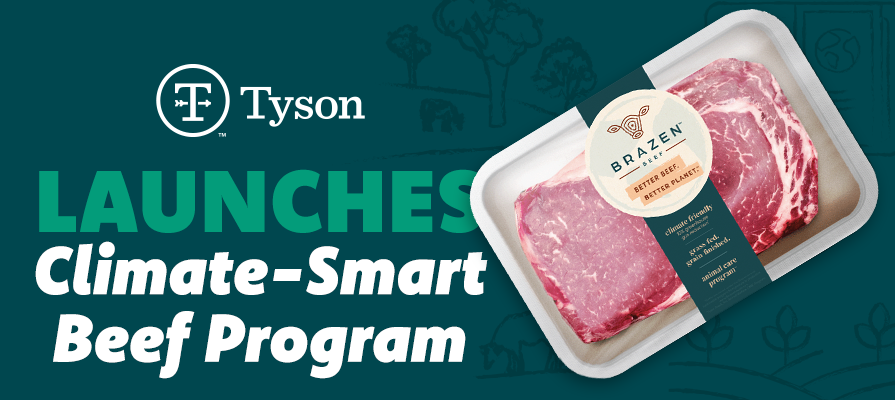
Tyson también hizo la increíble afirmación de que tenían un programa de carne de vacuno “sostenible para el clima”.” En una página web que ya no existe, Tyson presentó su “Camino hacia la carne de vacuno climáticamente inteligente”. La página admitió que la carne de vacuno era el mayor problema climático de la empresa. Destacó el programa de carne de vacuno climáticamente inteligente como una “iniciativa clave” que contribuiría a lograr el objetivo de Tyson de alcanzar la neutralidad climática para 2050.
Tyson incluso señaló que desarrolló su programa de carne de vacuno respetuosa con el medio ambiente con la ayuda de los grupos ambientales Environmental Defense Fund y Nature Conservancy. El sitio web de Tyson aprovechó la credibilidad de dos grupos ambientales bien conocidos, quizás tratando de hacer que sus afirmaciones sobre la carne de vacuno respetuosa con el medio ambiente parecieran confiables.
Tyson hizo un gran ruido con su programa de carne de res respetuosa con el clima, con la ayuda de un amigo de la empresa. Tras su anuncio, Deloitte patrocinó dos artículos en el Wall Street Journal que elogian los esfuerzos de Tyson para reducir sus emisiones. El contenido patrocinado posiciona a Tyson como pionero, que responde a la “economía alineada con el clima” con un “deseo” de producir carne de res con menores emisiones.
Alrededor de la misma época, Tyson comenzó a comercializar una nueva línea de productos que llamó “Brazen Beef”.” Según el sitio web del producto, que ya se ha eliminado, Brazen Beef debía obtenerse de proveedores registrados en el programa de carne de res climáticamente inteligente de Tyson.
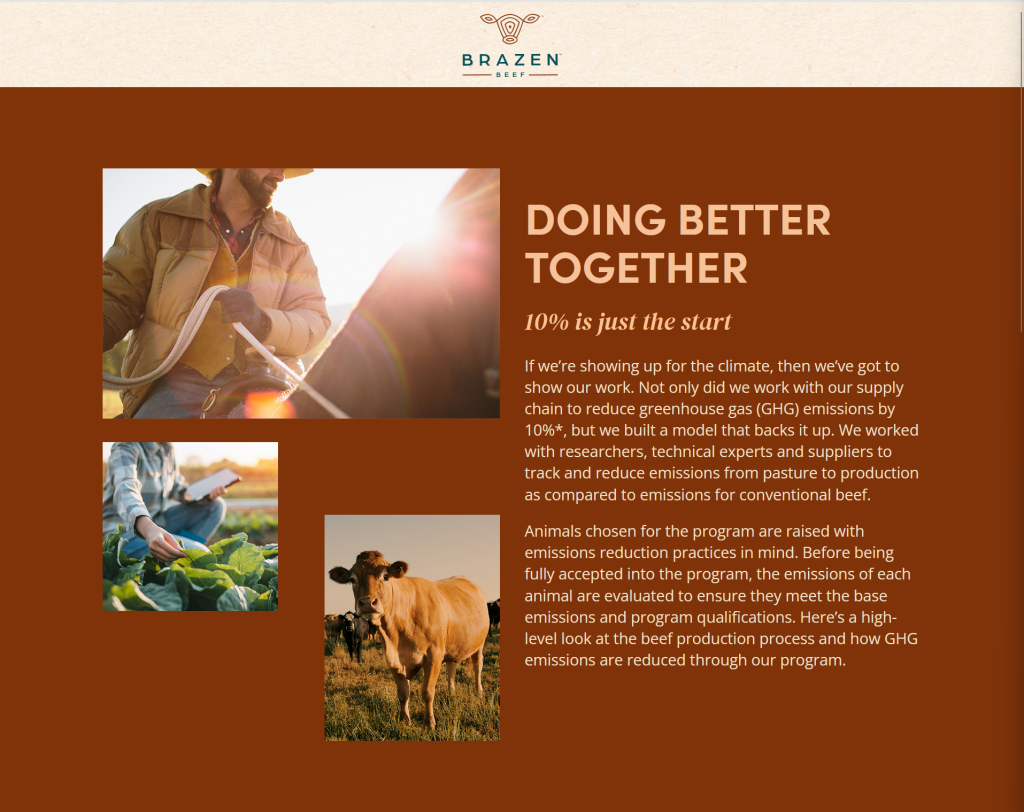
Tyson promovió ampliamente Brazen Beef, beneficiándose de la atención que estaba ganando por su carne de origen sustentable. Sin embargo, nunca hizo que Brazen Beef estuviera disponible para la compra en Estados Unidos. Pero eso no impidió que el gigante de la carne aprovechara al máximo la oportunidad de enjuiciar su imagen de manera verde.
Brazen Beef, el programa de carne climáticamente inteligente, y el compromiso de alcanzar la neutralidad de carbono para 2050. Estos no eran solo estrafalarios esquemas de marketing para hacer que los productos de Tyson parecieran mejores. Se trataba de mentiras que Tyson vendía para proteger el núcleo de su modelo de negocio ante la amenaza de que los consumidores informados abandonaran la compra de sus productos. En FarmSTAND sabíamos que era demasiado bueno para ser verdad y nos propusimos desvelar la verdad.
Mientras FarmSTAND y nuestros aliados investigaban la ciencia y los documentos públicos de Tyson, descubrimos pruebas contundentes de que Tyson estaba engañando a los consumidores. Estos documentos y nuestra investigación demostraron que las afirmaciones de Tyson de que no emitía gases de efecto invernadero eran imposibles de lograr —y Tyson tenía que haberlo sabido—. Y Tyson sabía, o debería haberlo sabido, que la carne de res producida industrialmente nunca podría ser verdaderamente respetuosa con el clima.
La empresa habló mucho sobre alcanzar la neutralidad de emisiones para 2050. Pero eso fueron solo palabras. Cuando Tyson hizo su compromiso de alcanzar la neutralidad de emisiones, ni siquiera comprendía la magnitud de sus emisiones. La empresa no tenía planes reales para reducir sustancialmente sus emisiones en ningún plazo determinado, sino que simplemente se limitaba a reducir las emisiones en los bordes de sus enormes emisiones totales. Al examinar los detalles en los informes climáticos de Tyson, descubrimos que las matemáticas simplemente no estaban bien hechas.
En los documentos públicos que analizamos, Tyson no explicó la metodología que utilizó para calcular sus emisiones. Lo que sí reveló sugirió que Tyson estaba subestimando severamente sus emisiones.
Entre el 80 y el 90% % de las emisiones de Tyson son lo que se denomina emisiones de ámbito 3. Las emisiones de ámbito 3 son las que se producen en la cadena de suministro de la compañía. Para Tyson, estas emisiones de ámbito 3 son todas las emisiones que se producen a partir de la alimentación, el cultivo y la gestión de los residuos de todas las vacas, cerdos y pollos que se convierten en sus productos cárnicos. Sin embargo, según admitió Tyson, al calcular las emisiones de ámbito 3 no incluyó las emisiones derivadas del cambio de uso del suelo. Esta exclusión no es insignificante. El cambio de uso del suelo, como la conversión de bosques en campos de cultivo o pastos para pastos, debería representar una importante fuente de emisiones de la compañía. Al omitirlas, Tyson ignoró una parte significativa de sus emisiones.
De hecho, empresas como Tyson suelen minimizar sus emisiones. Las empresas hacen afirmaciones generalizadas sin tener ningún fundamento, y además emplean medidas e metodologías incoherentes que omiten información clave para hacer que la situación parezca mejor de lo que realmente es.
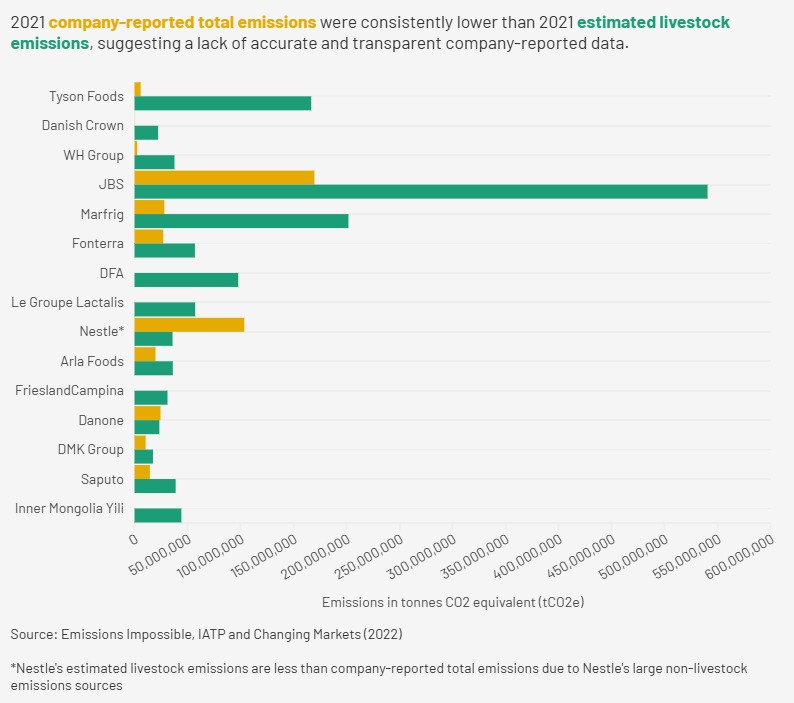
Este gráfico, de una versión anterior del Dashboard de emisiones de carne y lácteos del Instituto de Política Agrícola y Comercial, muestra la diferencia entre lo que las empresas reportan sobre sus emisiones (barras amarillas) y lo que un análisis independiente estima que son las emisiones reales (barras verdes). Cuando empresas como Tyson piensan que nadie está verificando su trabajo, piensan que pueden pasar por alto números que son demasiado buenos para ser ciertos.
Tyson ni siquiera estableció objetivos científicos
Al analizar los informes climáticos de Tyson, encontramos otra bomba. Tyson había promocionado sus “objetivos de reducción de emisiones basados en la ciencia” en sus anuncios sobre la neutralidad de carbono. Pero este “objetivo basado en la ciencia” no existía.
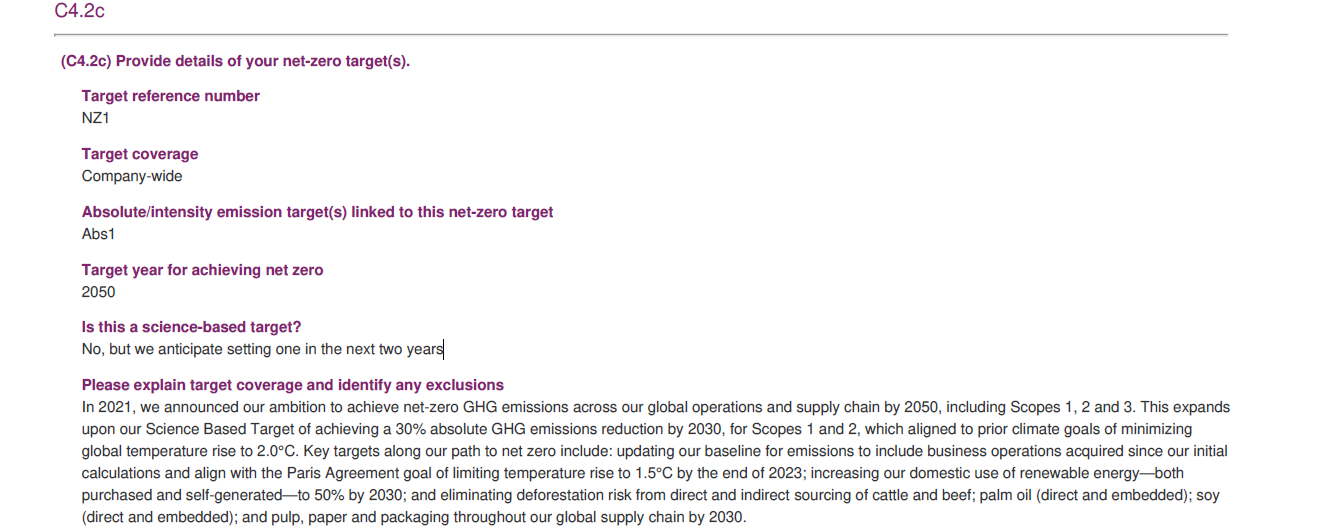
En este informe de 2023, dos años después de que Tyson hiciera su compromiso de alcanzar la neutralidad de carbono, la empresa admitió que su objetivo no estaba basado en la ciencia. Lo único que pudo decir fue que esperaba tener un objetivo basado en la ciencia dentro de otros dos años.
Las ambiciones climáticas sin ciencia nos parecen una tontería: la misma que Tyson utilizaba para engañar a los consumidores.
Las promesas climáticas de Tyson fueron muy bonitas, pero muy poca acción se llevó a cabo.
A pesar de sus grandes promesas, no parecía que Tyson exigiera a sus productores que adoptaran prácticas que redujeran las emisiones climáticas. En su informe sobre el clima, Tyson admitió abiertamente que no exigía a sus proveedores que cumplieran con ningún tipo de requisitos relacionados con el clima. Además, ni siquiera tenía planes de empezar a exigir objetivos climáticos a sus proveedores.

Lo máximo que Tyson pudo señalar como acción climática para sus agricultores proveedores fue que estaba comenzando a inscribir a los agricultores en un programa para adoptar prácticas como la reducción de la rotación de cultivos y la siembra de cobertura. Según su informe, para 2021 Tyson había inscrito menos del 5 por ciento del total de la tierra que abastecía de alimentos para su cadena de suministro en este programa piloto, dejando la mayor parte de las emisiones de su cadena de suministro fuera de cualquier esfuerzo de reducción de emisiones que se pretendiera realizar.
Según las estimaciones públicas, más de la mitad de las emisiones totales de Tyson provienen en forma de metano. El metano es un gas de efecto invernadero que tiene una potencia mucho mayor para calentar el planeta. El metano se emite en períodos de tiempo más cortos que el dióxido de carbono. El metano se emite de dos fuentes principales en la actividad empresarial de Tyson. Las emisiones enteras de metano provienen de la digestión de los animales (como los gases que emiten las vacas). La otra fuente es el estiércol, que puede emitir una gran cantidad de metano dependiendo de cómo se manipula y degrada.
Reducir estas emisiones sería especialmente difícil para una empresa con una cadena de suministro de carne de res industrial enorme. Sin embargo, a pesar de esto, la empresa Tyson no compartió en sus informes climáticos ningún plan para reducir significativamente ninguno de estos tipos de emisiones de metano.
Otra área en la que Tyson podría haber hecho una verdadera diferencia en su impacto climático sería combatir la deforestación en su cadena de suministro. Pero en las divulgaciones sobre el clima y otros documentos que analizamos para fundamentar nuestra argumentación, descubrimos que Tyson no se comprometía a poner fin a la deforestación en su cadena de suministro antes de 2030. De hecho, el consejo de administración de la empresa rechazó una propuesta para comprometerse a poner fin a la deforestación en su cadena de suministro para 2025.
Si Tyson realmente “estuviera reinventando toda la cadena de suministro desde la granja hasta el plato”, como afirmaba, probablemente habría invertido mucho dinero en descubrir cómo hacerlo. Pero en 2022, Tyson anunció que invertía $42 millones en promover prácticas climáticamente inteligentes. Eso puede parecer mucho, pero las ventas anuales de Tyson eran aproximadamente $53 mil millones Eso significa que Tyson solo se comprometió a invertir el 0,08% % de sus ingresos en prácticas climáticamente inteligentes. Esto representa solo una pequeña fracción de lo que la empresa invierte en publicidad al año.
De manera similar, Tyson solo destinó el 0,2% % de sus ingresos a todas sus actividades de investigación y desarrollo, incluidos los estudios sobre la reducción de las emisiones.
Empresas como Tyson son buenas para ofrecer a la gente información que parece muy atractiva, por lo que nadie se detiene a ver la imagen completa y desagradable de sus impactos climáticos. El equipo de FarmSTAND no se dejó engañar. Usando lo que estaba a la vista, reconstruimos la verdadera historia. No hay ningún plan para obligar a los proveedores a cumplir con los requisitos climáticos. No se ha tomado ninguna medida para reducir significativamente las emisiones de metano. No se ha comprometido a abordar la deforestación de forma inmediata. Solo una fracción de una fracción de los ingresos se destina al desarrollo de prácticas y soluciones climáticamente inteligentes.
Sin embargo, Tyson estaba diciendo al mundo que era un líder en materia de clima, transformándose para llegar a ser neta de carbono para 2050.
Carne de bronce, ¡de verdad!
Tyson hizo un gran hincar sobre su programa de “carne climáticamente inteligente”. FarmSTAND y nuestros aliados buscaron información sobre lo que Tyson consideraba carne climáticamente inteligente, pero Tyson hizo que las respuestas fueran difíciles de encontrar.
Durante el tiempo en que Tyson hacía afirmaciones sobre su carne de vacuno respetuosa con el clima, la empresa nunca publicó ningún dato que demostrara qué factores hacían que un producto en particular fuera respetuoso con el clima. Tampoco reveló qué prácticas adoptaban los ganaderos y los propietarios de granjas intensivas que participaban en el programa, ni tampoco cuánto redujeron las emisiones de GEI.
En su publicidad, Tyson destacó a una granja de engorde como la que suministra la carne de res más respetuosa con el clima: Adams Land and Cattle. Nuestro cliente EWG investigó esta granja avícola. Lo que la EWG descubrió estuvo muy por debajo del mensaje restaurador y respetuoso con el medio ambiente que Tyson estaba vendiendo.
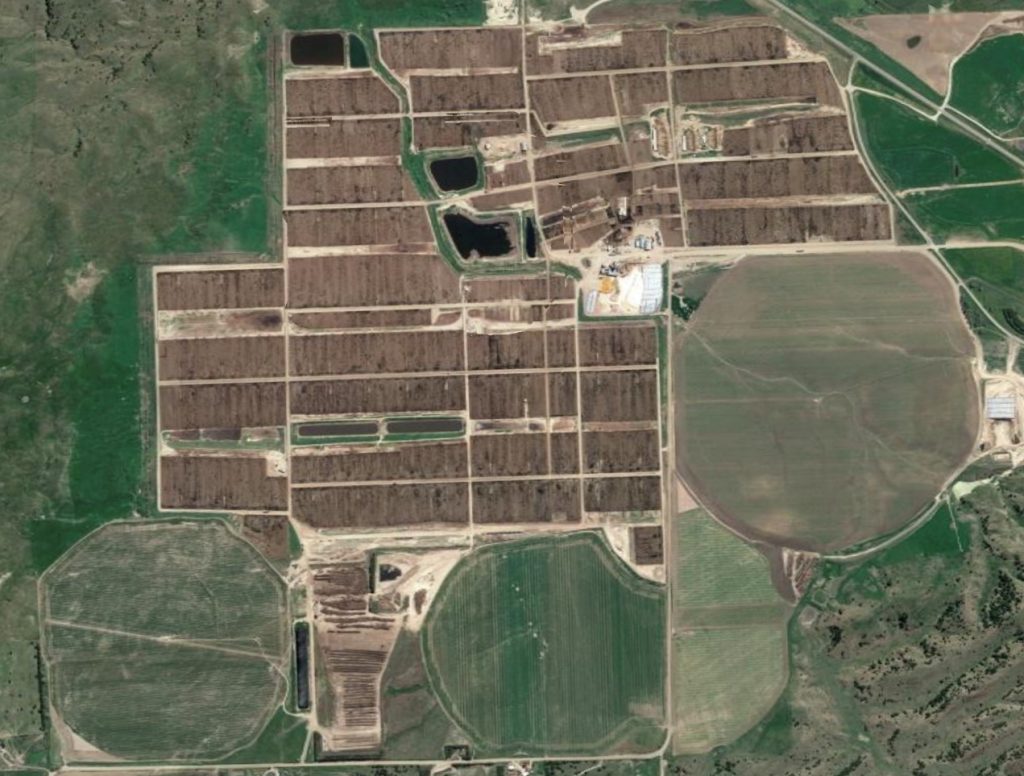
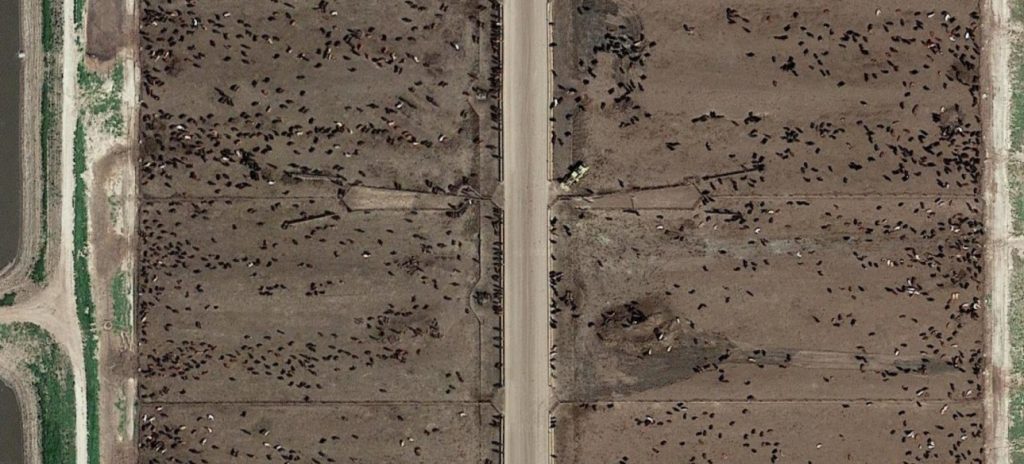
Tyson promocionó Brazen Beef como un nuevo futuro verde y revolucionario para la carne de vaca que es buena para el planeta. Pero su proveedor era una una granja industrial con decenas de miles de vacas.
Aunque los consumidores que leían sobre “carne inteligente para el clima” podrían haber imaginado a las vacas pastando en praderas verdes, la realidad era muy distinta.
Como se podía observar en las imágenes satelitales, los granjas avícolas son recintos desérticos y fangosos que albergan miles y miles de vacas en un espacio confinado. Los animales confinados en estas granjas producen grandes cantidades de metano y estiércol.
La jugada de Tyson con Brazen Beef ocultó dos verdades importantes para los consumidores: en primer lugar, que Tyson no podía ni quería explicar exactamente qué hacía de su carne climáticamente sostenible; y en segundo lugar, que su producto Brazen Beef provenía de los mismos tipos de granjas intensivas industriales que otras carnes que ninguna persona razonable consideraría climáticamente sostenibles.
Incluso si Tyson hubiera cumplido con todas sus promesas climáticas, no habría importado. La carne industrial nunca puede ser respetuosa con el clima, y alcanzar la neutralidad de carbono es imposible para una empresa como Tyson.
La producción industrial de carne es inherentemente perjudicial para el clima. Y eso sin mencionar la devastación que causa a nuestro aire y agua, a las comunidades y a los animales. La carne industrial es especialmente perjudicial para el clima. Incluso con reducciones significativas, nunca será un alimento respetuoso con el clima.
Análisis de IATP, Greenpeace, Foodrise y Friends of the Earth demuestran que Las 5 principales empresas de carne (incluyendo a Tyson) emiten juntas más gases de efecto invernadero que las compañías petroleras. Chevron, Shell o BP. La ONU estima que la agricultura animal representa hasta un 20 por ciento de las emisiones globales de gases de efecto invernadero.
Y según la EPA, la agricultura animal contribuye con alrededor del 36% % de las emisiones de metano en Estados Unidos. El metano es un potente gas de efecto invernadero Eso es 30 veces más potente que el dióxido de carbono durante 100 años. El metano es 80 veces más potente que el CO2 Más de 20 años. Debido a su potencia a corto plazo, abordar las emisiones de metano es urgente y necesario para combatir la crisis climática.
Tyson, que produce 20% % de la carne de vacuno, pollo y cerdo de Estados Unidos, se calcula que emite más gases de efecto invernadero que muchos países, como Austria, Bélgica y Grecia. Casi todas esas emisiones —un estimado del 85 por ciento— provienen de la producción de carne de vacuno de Tyson.
Debido a la magnitud de las emisiones generadas por la carne de vacuno de Tyson, incluso si la empresa pudiera reducir las emisiones en un 10 por ciento, su carne seguiría siendo muy perjudicial para el clima.. No es más convincente decir que el ganado de Tyson, con un 10 por ciento menos de emisiones, es bueno para el clima que decir que un cigarro con un 10 por ciento menos de tabaco es saludable para los niños.
Tyson no pudo producir carne industrial respetuosa con el clima, y tampoco pudo alcanzar la neutralidad de carbono. Incluso si Tyson hubiera tomado todas las medidas posibles para reducir el metano y otras emisiones (como demostró nuestra investigación), aún no podría alcanzar la neutralidad de carbono. La empresa aún tendría una enorme cantidad de emisiones restantes que habría que compensar con proyectos de compensación.
Si Tyson hubiese podido reducir de alguna manera sus emisiones reales en un 75 por ciento, Aún así, sería necesario compensar aproximadamente 42 millones de toneladas métricas de emisiones de dióxido de carbono. No existen compensaciones de esa magnitud. Se necesitaría plantar un bosque del tamaño de Dakota del Sur para compensar las emisiones de Tyson.
Con tanto en juego para nuestro clima, FarmSTAND y nuestros aliados no podían dejar que la mentira de Tyson quedara impune. Les presentamos una demanda en los tribunales y exigimos responsabilidad. Ahora, a través de proyectos como este Deep Dive, estamos mostrando cómo revelamos todos los detalles obscuros para presentar la demanda. Los consumidores y los defensores del clima merecen información sobre los impactos climáticos de Tyson y otros grandes vendedores de carne, para que puedan detectar las mentiras.
Las empresas de gran consumo como Tyson nunca quieren cambiar su modelo de negocio básico, que explota la tierra, los animales y las personas. En cambio, prefieren utilizar estrategias de marketing sofisticadas para engañar a los consumidores y hacerles creer que han cambiado.
Después de que presentamos una demanda, el engañoso juego de Tyson llegó a su fin. En 2025, Tyson aceptó resolver nuestro caso. Al hacerlo, la empresa prometió que Tyson dejaría de hacer sus afirmaciones sobre la carne con cero emisiones netas y apta para el clima durante los próximos 5 años, a menos que un experto pueda respaldar realmente sus afirmaciones. Dado que incluso el registro público deja claro que estas afirmaciones no tienen respaldo alguno, en la práctica esto significa que Tyson no hará más engaños similares en un futuro muy próximo.
Como parte del acuerdo, Tyson desestimó las reclamaciones objeto del caso. Por eso hemos proporcionado capturas de pantalla y versiones archivadas de los anuncios y sitios web de Tyson en este artículo de investigación, como el sitio web de Brazen Beef.
Alrededor de la misma época que el acuerdo histórico de nuestro caso contra Tyson, El fiscal general de Nueva York también llegó a un acuerdo con JBS, la compañía cárnica más grande del mundo. La demanda de Nueva York apuntaba contra JBS por engañar al público con la afirmación de que JBS no tenía ningún plan para lograr la neutralidad de carbono para 2040.
Juntas, los acuerdos de Tyson y JBS representan un cambio real. Estas dos empresas producen aproximadamente la mitad de la carne de vacuno consumida en los Estados Unidos. Ahora, están obligadas por estos acuerdos a no hacer afirmaciones engañosas.
Antes de nuestra demanda, las empresas cárnicas hacían todo tipo de afirmaciones audaces sobre el clima, con la esperanza de beneficiarse de los consumidores bien intencionados. estudio reciente examinaron las afirmaciones ambientales realizadas por las mayores empresas mundiales de carne y lácteos entre 2021 y 2024. Los investigadores descubrieron que 98% de estas afirmaciones podrían ser una forma de greenwashing reivindicaciones sin impacto significativo.
Desde que se establecieron los asentamientos, nuestro equipo ha observado que la avalancha de afirmaciones climáticas engañosas provenientes de empresas de carne se ha reducido a un ritmo lento.
Nuestra demanda y acuerdo judicial enviaron un claro mensaje a estas empresas: no vamos a dejar que se salgan con la suya.
La gran industria agrícola no puede mantener la coherencia en sus afirmaciones. FarmSTAND denuncia la hipocresía
La gran industria agropecuaria se ha vuelto demasiado cómoda al decir lo que sea conveniente para sus intereses en cualquier momento, independientemente de si es o no cierto. A veces, eso parece que Tyson se presenta como un líder climático para ayudar a vender sus productos. En otros momentos, parece que la gran industria agropecuaria se presenta como la víctima cuando los verdaderos líderes del clima piden responsabilidades.
Sea cual sea la estafa, FarmSTAND está dispuesta a actuar rápidamente y a utilizar la ley para hacer rendir cuentas a las poderosas corporaciones e grupos industriales.
California aprobó el California Climate Accountability Package, un conjunto de leyes que obliga a las grandes empresas a proporcionar datos sobre sus emisiones de gases de efecto invernadero. La American Farm Bureau presentó una demanda para intentar impedir la implementación de estas leyes. A pesar del nombre, la Farm Bureau es un grupo de presión que trabaja arduamente para consolidar el poder de unos pocos grandes agroempresas, y no de los agricultores, sobre el sistema alimentario estadounidense.
Cuando parecía que empresas como Tyson tendrían que realmente hacer cálculos y demostrar su trabajo, los voceros de la gran industria agropecuaria empezaron a gritar que la rendición de cuentas climática destruiría la agricultura estadounidense.. En sus presentaciones, el Farm Bureau argumentó que pedir a los agricultores que abastecen a grandes empresas que registren las emisiones los llevaría a la quiebra.
La Farm Bureau hizo ruido en California por la idea de que sería muy malo exigir que los gigantes de la industria agropecuaria como Tyson calcularan las emisiones de la cadena de suministro. Mientras tanto, Tyson seguía presumiendo de la eficiencia con la que calculaba y reducía las emisiones de su cadena de suministro. La realidad es que grandes corporaciones como Tyson, Cargill, JBS y Marfrig ya están calculando sus emisiones. Evidentemente, lo han hecho sin poner cargas adicionales sobre los agricultores que abastecen a sus empresas.
Nos parece que el Farm Bureau no tiene ningún problema con que las empresas calculen las emisiones —sino con que los legisladores exijan transparencia y coherencia—. En un intento de ocultar a los miembros y los financiadores de su sector agropecuario de la mirada crítica, el Farm Bureau intentó esconderse tras la figura de los “agricultores familiares independientes” para impedir la aprobación de las leyes.
La gran ironía es La mayor amenaza para los agricultores independientes son los gigantes de la industria cárnica que los explotan y los controlan..
FarmSTAND no podía dejar que esta estafa perdurara. Presentamos una amicus curiae Breve Para dejar claro que la gran industria agrícola no se perjudica al revelar sus emisiones y que en realidad no le importa nada a los agricultores independientes. Solo menciona la difícil situación de los agricultores familiares cuando utiliza sus argumentos para evadir la responsabilidad. Además de presentar la argumentación en los tribunales, nuestro escrito también influyó Cobertura informativa nacional de la cuestión —aportando la voz de los verdaderos agricultores e consumidores independientes a la conversación.
La acción climática es urgente. Por eso FarmSTAND está impulsando la rendición de cuentas climática en los tribunales.
Vivimos en una época en la que nuestro gobierno federal no actúa en relación con el cambio climático y reprimió a las instituciones que sí lo hacen. La gran industria agrícola tiene un control muy estrecho sobre las agencias que deberían regularlo. No podemos permitirse esperar que la gran industria agrícola o el gobierno hagan lo correcto. Por eso, es más importante que nunca que FarmSTAND y nuestros aliados desafiemos el greenwashing y responsabilicemos a la gran industria agrícola en los tribunales.
Hay agricultores que están transformando nuestro sistema alimentario y aplicando una agricultura verdaderamente climáticamente inteligente. No son Tyson o JBS, son agricultores independientes que luchan todos los días para sobrevivir y prosperar. Estos agricultores están bajo la amenaza de los gigantes de la gran industria agrícola y de Un gobierno federal que quiere retroceder en los avances.
En FarmSTAND, utilizamos la ley para desmentir las mentiras de la industria, proteger a los consumidores y ayudar a las personas que están construyendo un sistema alimentario más sostenible. Cuando podemos utilizar nuestra experiencia legal para arrojar nueva luz sobre casos como el de Tyson, FarmSTAND da prioridad a compartir nuestros hallazgos de forma amplia con el movimiento por un sistema alimentario justo.
Nuestros resultados en los tribunales son solo nuestro primer paso. Después de eso, nos comprometemos a garantizar que los defensores, periodistas, consumidores y legisladores puedan acceder a la información vital que necesitan para impulsar un cambio real en nuestro sistema alimentario. Lo hacemos a través de recursos como nuestros reportajes profundos y a través de las relaciones y el poder que estamos construyendo con las comunidades de todo el sistema alimentario.