Por Sylvia Regan
Paralegal de investigación
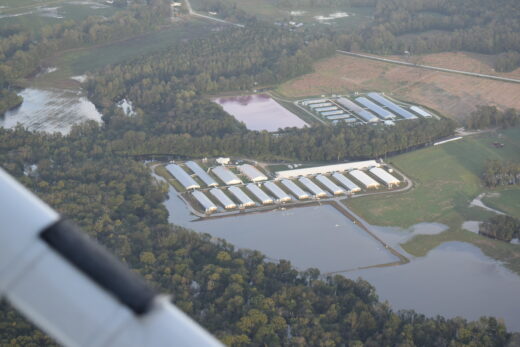
As climate change drives ever stronger and more frequent natural disasters, communities across the country are facing deadly weather events with alarming regularity. Recovering from disasters like hurricanes and flash flooding is hard enough, but people living near industrial factory farms face an additional threat: overflowing manure and other waste contaminating their water and land.
In areas like eastern North Carolina, factory farms that produce hogs and poultry are smelly neighbors every day of the year. Industrial hog farms collect millions of gallons of untreated feces in open air manure lagoons, emitting noxious odors and attracting flies and other pests. They then spray this liquid manure onto nearby fields — and often into the yards and houses of their neighbors, making it impossible for people to enjoy their homes. This waste also runs off into waterways, contaminating drinking water and polluting the environment. Pollution from these factory farms is a form of environmental racism, as these facilities are often located near communities of color, disproportionately exposing these residents to harmful waste. Unfortunately, many elected officials in these areas are keener to promote the interests of Big Ag polluters than they are to protect the people experiencing the impacts of factory farm waste.
Even when floods subside, the harms of factory farming continue to haunt impacted areas. After Florence, there was a major increase in E. coli and fecal matter found in water from private wells. Clean, safe drinking water is a human right, yet communities near factory farms receive little government support to protect this right. Rural communities primarily rely on water from private wells, which are not regulated by the federal government or most state governments. That means that private well users must bear the costs of testing and treating their wells, adding hundreds or thousands of dollars on top of all the other costs of recovering from a hurricane. And while rural communities of color pay for treating their water, the factory farms that contaminated it in the first place get off scot-free.
Factory farms also drive economic losses for crop farmers impacted by extreme weather. After Florence, farmers whose crops were flooded by the storm were unable to sell their goods for human consumption or even for animal feed without testing because of the health risks of consuming crops contaminated by factory farm waste.
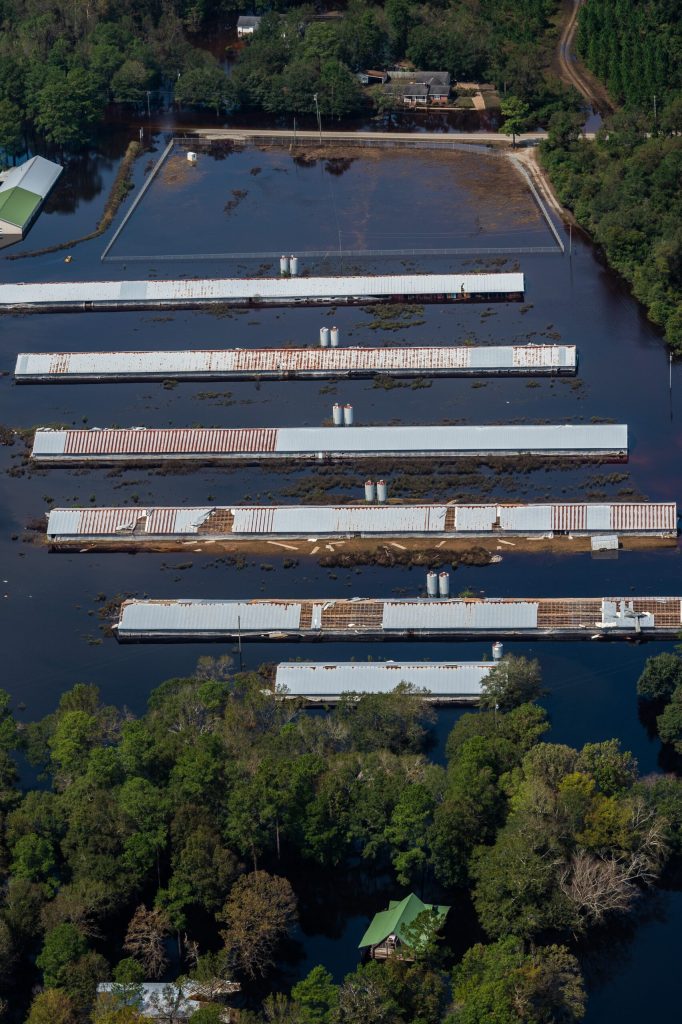
More recently, Hurricane Helene ripped through much of the southeastern United States. Helene damaged or destroyed at least 107 poultry facilities and 15 dairies in Georgia alone. When disasters like this strike factory farms, the meat companies that own the birds receive payments from USDA for $3 per bird. Meanwhile, the contract growers who actually produce the birds and have to clean up the aftermath only get 33 cents per bird.
Contract growers are often already in precarious financial situations due to being stuck in exploitative contracts with massive companies. A natural disaster taking out their birds can have devastating impacts on their livelihoods and rural communities.
It’s unfair to rural communities that neighboring factory farms further endanger their physical and economic health during natural disasters. And it’s not like factory farms are innocent victims of extreme weather just like their neighbors. Industrial animal agriculture is a leading source of greenhouse gas emissions, which heat the planet and cause climate chaos like increasingly strong hurricanes. In fact, the top five meat and dairy companies in the world combined emit more greenhouse gases than ExxonMobil, Shell, or BP do.
FarmSTAND is also fighting to hold big meat companies accountable for their emissions and for deceiving people about the real consequences of industrial animal agriculture.
Factory farms unacceptably endanger the people and ecosystems around them. Whether it’s for the runoff contaminating rivers, bacteria infecting floodwater, or greenhouse gases driving climate change, big meat companies need to be held accountable. Learn more about how FarmSTAND is fighting for a fair food system across at FarmSTAND.org.
Featured Image Credit to Matt Butler, Sound Rivers, Waterkeeper Alliance