Por Lucy Thames
Organizador/a de Justicia Laboral
A fair food system is one in which workers receive a livable wage and where they feel safe to defend their rights at work. But the United States’ food system is built on a long history of oppression and exploitation. Due to agricultural exceptionalism, farmworkers aren’t protected by several laws that many people would expect in the workplace, including laws related to organizing and child labor. Now, the government is partnering with Big Ag to further dismantle worker power and maximize Big Ag’s profits at the expense of workers. This is all part of Big Ag’s playbook for the food system workforce:
- Cut legal protections,
- Expand exploitative visa programs, and
- Instill fear to discourage activism.
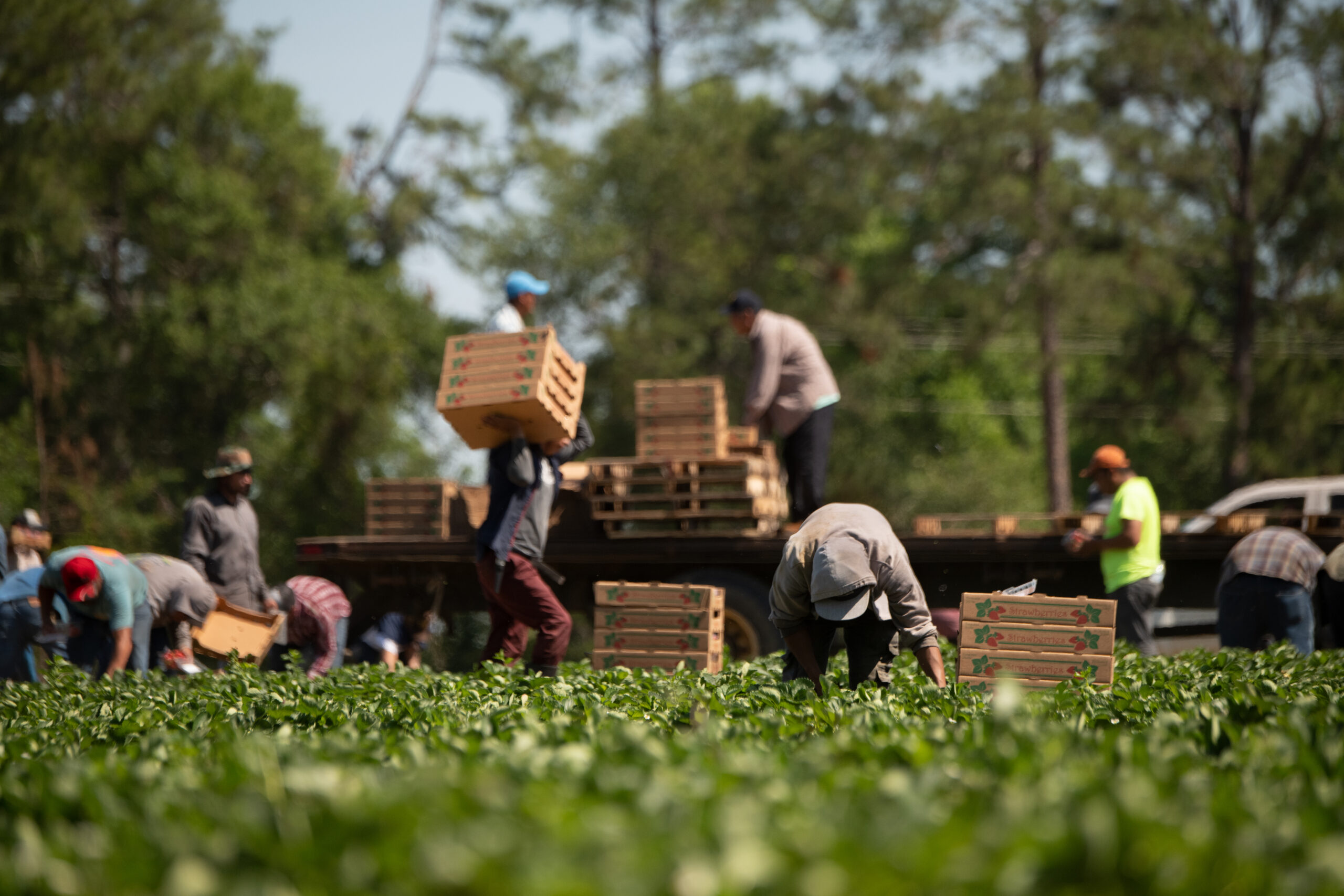
Up to one sixth of farmworkers in the United States have H-2A visas, which let them perform temporary, seasonal agricultural labor in the United States. Because of its temporary and seasonal nature, the program is mostly used for crop work, like planting blueberries or harvesting tobacco. Since year-round work on dairies or at meat-processing plants typically doesn’t have seasons, employers in those industries have generally not been able to hire H-2A workers. But now, Big Ag is trying to expand the H-2A program into all areas of the food system.
Before requesting H-2A workers, employers must show that there are not enough U.S. workers to complete the job. The government sets a minimum wage for H-2A workers in each state. This minimum wage also applies to the U.S. workers that work alongside them, to prevent employers from having a preference for H-2A workers.
While the H-2A visa program may allow many workers to enter the U.S. who would not have other pathways to do so, the program is rife with labor violations and has little oversight. It’s also important to note that H-2A workers’ visas are tied to a single employer. If they lose or leave their job, they will lose status in the United States. This makes H-2A workers more vulnerable to exploitation, because reporting abuse may mean losing their job, and therefore, their status.
Last year, the U.S Department of Labor announced a rule that has made conditions even worse for workers. One of the biggest changes in this rule is the way that wages are calculated for H-2A workers and the U.S. workers who work alongside them. The new rule lets employers pay them between $0.71 and $3.18 less per hour, depending on the state they work in. For H-2A workers, the Department of Labor’s new rule includes for the first time an additional deduction from hourly wages for housing. This violates a long-standing protection that allows H-2A workers to receive housing at no cost. Since the H-2A program has traditionally been a temporary source of farm labor from other countries, workers have few other options for housing beyond what their employer provides.
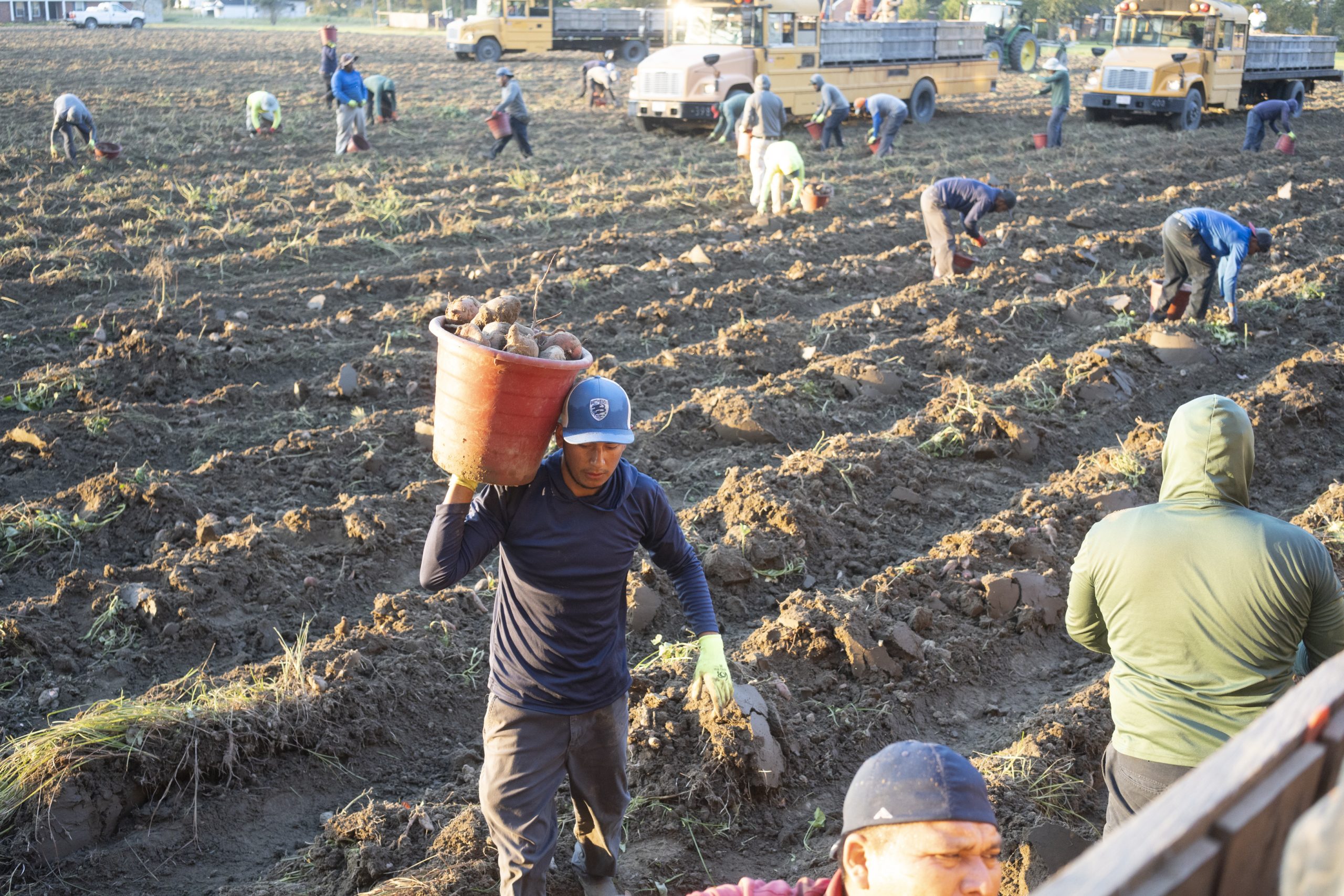
This housing is often overcrowded, and may not have AC, internet access, or indoor bathrooms. People may be in bunk beds and sometimes have even lived in school buses. But now, workers may still have lower wages to account for “housing costs.”
That means that this summer, working conditions for farmworkers under the H-2A program in the United States will still be hot, strenuous, and isolated, but the terms of their work are starkly different than they were last summer. H-2A farmworkers in Georgia, for example, can be paid up to $5.28 less per hour. That’s a loss of $211.20 in a 40-hour workweek. This can mean a more than 30% reduction in Georgia H-2A workers’ earnings when compared to last summer.
These changes follow last year’s repeal of the 2024 Farmworker Protection Final Rule, which the Biden Administration had implemented to increase protections for H-2A workers. These protections related to hiring, firing, and workplace safety, among other issues.
By taking away the increased protections, and issuing the new rule, the government is helping Big Ag create a steady workforce which it thinks won’t fight back.
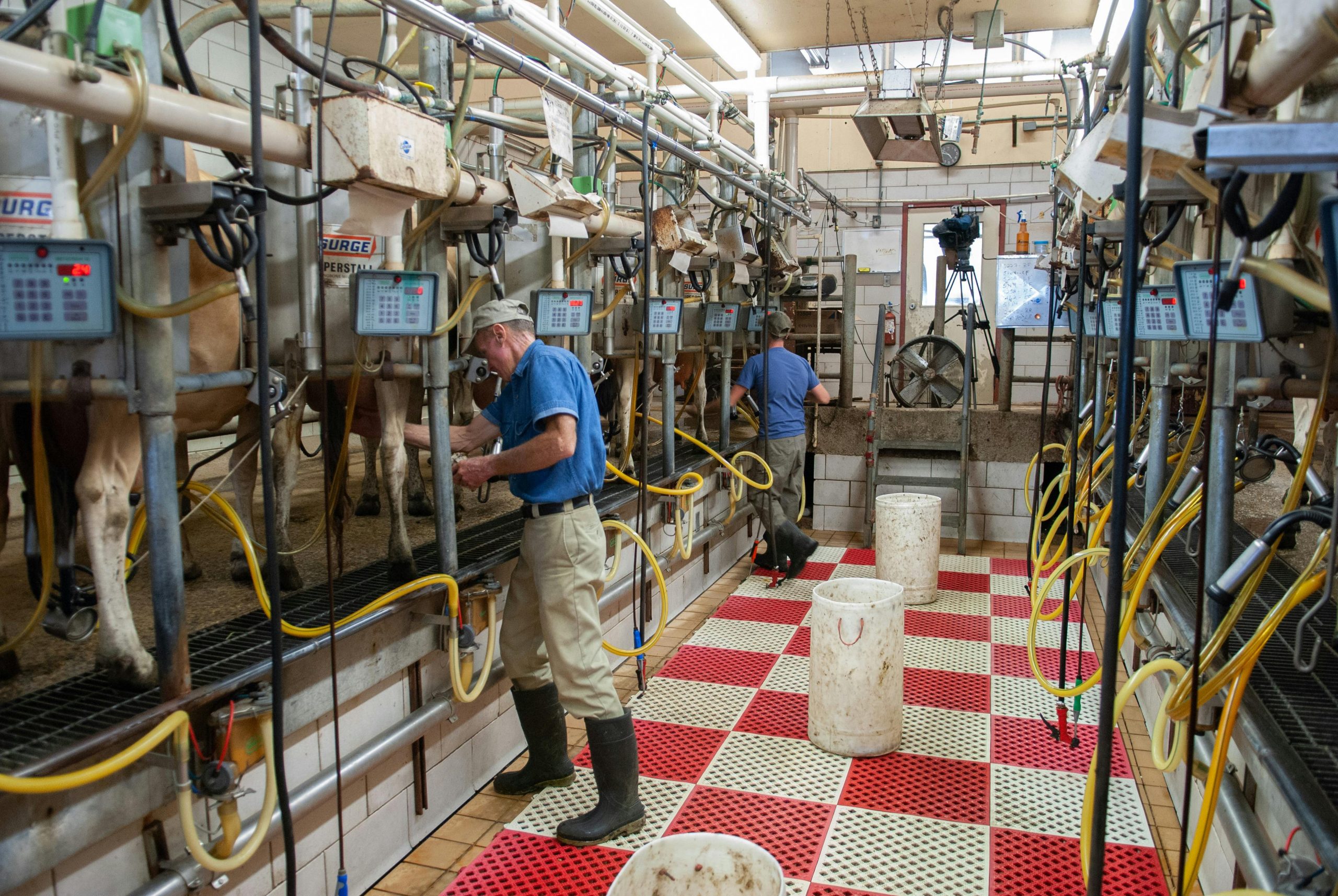
But these drastic shifts aren’t all. At the same time that the Department of Labor is cutting protections, Big Ag is also lobbying for the H-2A program’s expansion. In June of this year, United States Citizenship and Immigration Services (USCIS) released a policy memorandum, without the opportunity for public comment, stating that workers with H-2A visas can work in the dairy industry, which operates year-round. This contradicts the purpose of the H-2A visa, which is supposed to be used for temporary labor shortages and “seasonal” work. It also represents a behind-the-scenes effort to expand a deeply flawed, temporary labor migration program while removing the already insufficient protections that the program has historically offered.
Additionally, a bill recently introduced in the House of Representatives, and supported by Big Ag groups including the American Farm Bureau Federation and the National Pork Producers Council, would expand the H-2A program into new industries, including meat and poultry processing. It would also worsen protections. This fits nicely into Big Ag’s goals: expand a program that has fewer rights and lower wages to other sectors of the food system, in order to make even more of a profit.
These changes to the H-2A program, and farmworkers’ rights more broadly, do not exist within a bubble. Instead, they’re occurring in an environment of increased immigration enforcement intended to stoke fear among immigrant communities. This is especially true for those who are undocumented or who have a precarious status, such as Deferred Action for Childhood Arrivals (DACA) or Temporary Protected Status (TPS).
In June of 2026, the Supreme Court ruled that the Trump Administration can end TPS for Haitian and Syrian immigrants in the United States, many of whom power the food system. Less than a week later, the bill to expand the H-2A visa program was announced. People with TPS have work authorization that lasts for years and can be used at any U.S. workplace, allowing workers to move jobs if they want or need to. In contrast, H-2A workers, who Big Ag want to work in meatpacking, are especially vulnerable to labor abuses because their visa is tied to just one employer. If H-2A workers speak up about working conditions and lose their jobs, they can very quickly lose their status in the United States.
This is all happening in the context of the United States’ long history of conducting immigration raids at worksites in the food system, from the multi-state Swift raids of 2006 and the Smithfield raid of 2007, to the much more recent raids at food system worksites that we saw last year. As the United States ruthlessly pursues undocumented people, it also continues to take status away from those who have it, like people with TPS. In all of this, the Trump Administration is expanding the H-2A program in which workers may fear that speaking up about labor rights violations will lead to detention and deportation.
These immigration and labor policies fit into what Big Ag has always wanted — a workforce that will have to work for less wages, under worse conditions, and who will be at risk of detention, deportation, and replacement if they speak up about their rights at work.
When the Department of Labor issued its H-2A rule cutting farmworker wages, it said that the Trump Administration’s increased immigration enforcement has caused an emergency labor shortage in the food supply. The Department of Labor provided this as an excuse for why it denied workers and advocates the opportunity to submit public comments, as is required of normal rulemaking. In doing so, the Trump Administration denied the public of their right to participate in the rulemaking process and to weigh in on how these changes will impact workers. But we see that this “emergency” is simply another effort to drive wages down without accountability. Workers see it too, and they won’t have it.
Food system workers are continuing to organize and speak up about labor rights violations. FarmSTAND is supporting Haitian meatpacking workers in Greeley, Colorado as they fight back against discrimination. 18 farmworkers joined United Farm Workers and the UFW Foundation in suing the Trump Administration in November 2025 over the rule that altered farmworkers’ wages. FarmSTAND submitted a brief to the court in that case on behalf of five former U.S. Secretaries of the Department of Labor, highlighting the harms these changes are causing to farmworkers.
From demanding corporate responsibility, to telling their stories in Congress, to going on strike, workers and workers’ rights advocates are finding creative ways to fight back. Big Ag’s playbook is to cut workplace protections, expand a flawed visa program, and instill fear. But at FarmSTAND we’re fighting for a future in which workers are paid fairly, have pathways to permanent status, and have a say in the decisions that affect them. We’ll continue to fight alongside them as they seek justice and build the food system that we want to see.