By David Muraskin
Managing Director for Litigation
Industrial food production relies on people holding their bladders to the point of bursting or beyond.
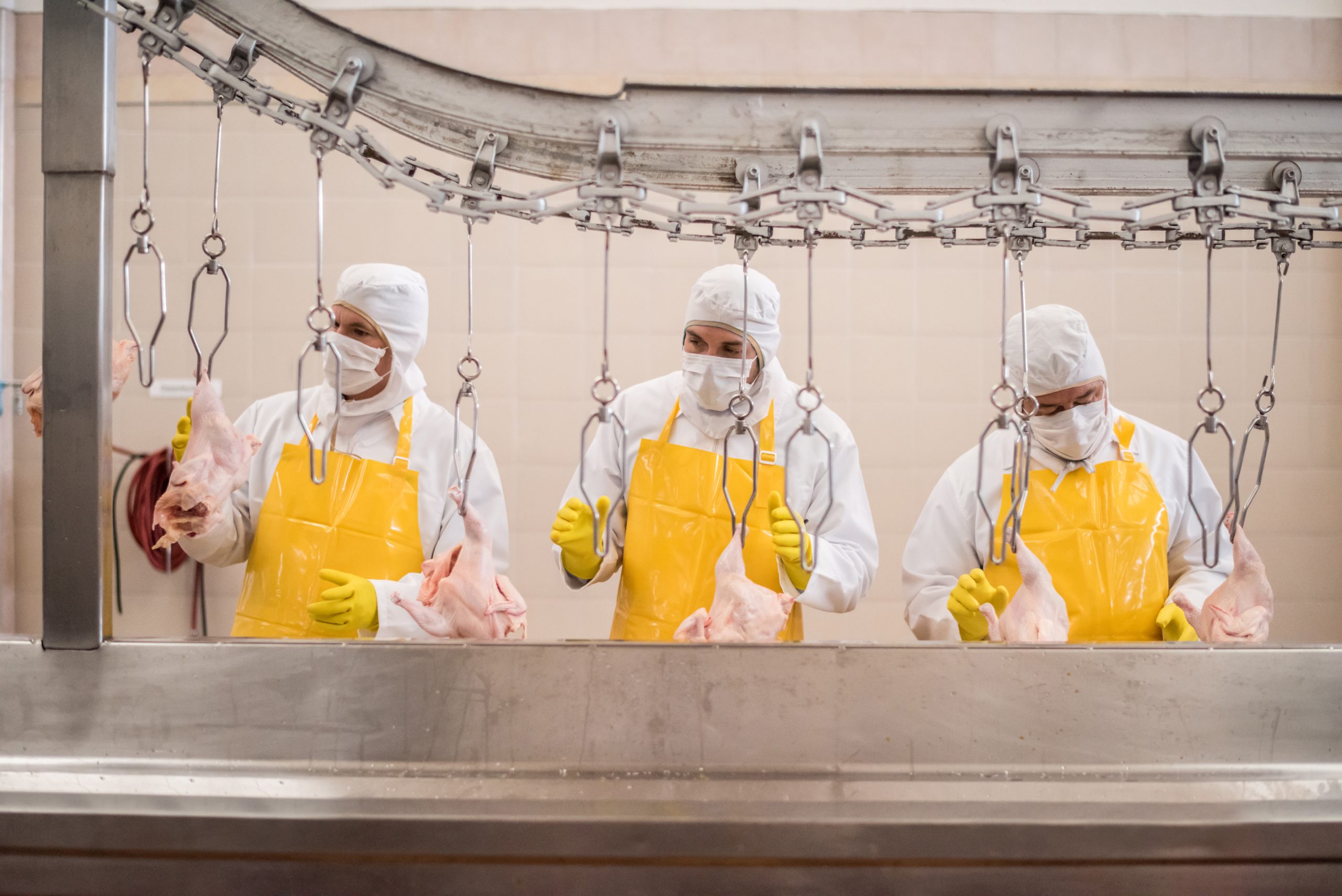
The industrial agriculture system turns animals into meat like this: workers stand on disassembly lines performing their assigned task over and over for hours on end. Substitute workers can provide temporary relief, but they cost money and don’t increase production.
Because investor profit is how mega-corporations judge success, subs are kept to a minimum. As a result, “[n]early everyone has stories of workers peeing on the line.”
It shouldn’t be this way. FarmSTAND’s latest suit against the Trump Administration aims to protect workers across industries from discrimination, and there’s so much at stake for food system laborers in particular.
For example, to avoid urinating on the line, or even defecating, some slaughterhouse workers wear diapers and/or limit their food and water intake—increasing other risks, as their jobs involve quick motions, with sharp knives, around heavy equipment.
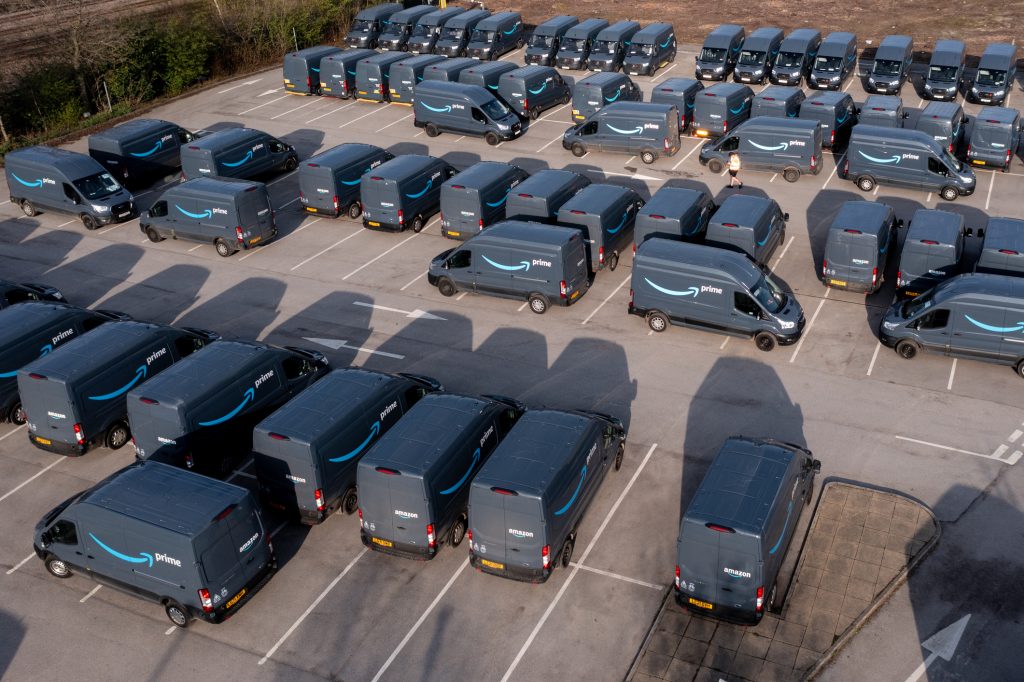
Likewise, with e-commerce giants like Amazon, the more a person delivers, the lower the cost to the company and the greater the revenue. As a result, Amazon imposes grueling “delivery rates,” which do not allow for extra stops or even pausing along the assigned route. Unsurprisingly, then, the company has repeatedly had to address employees returning trucks with bags of urine and feces.
These conditions are not only inhumane, but discriminatory.
Those with typical female anatomy are more likely to develop urinary tract infections and serious kidney infections if they are forced to wait to pee. A shorter urethra means being made to hold it alone is sufficient for a bacterial pathogen to cause a kidney infection, which can possibly be fatal.
This is a problem for workers in slaughterhouses. Industrial animal agriculture depends on pumping its animals with antibiotics to head off the heightened risk of disease that results from raising massive numbers of animals in highly confined conditions. This misuse of antibiotics creates the perfect conditions for antibiotic resistant bacteria to fester.
As a result, just eating industrially produced chicken may transmit antibiotic resistant bacteria to the consumer. Workers who are asked to slaughter the animals, and are regularly exposed to the animals’ “blood, offal, and grease,” are at even greater risk.
On top of potential for infection, policies that limit bathroom access deter female employees. A person on their period, who is pregnant, or who is breastfeeding will need breaks more frequently. Workplaces that regularly prevent them are either going to get fewer female applicants or have a higher rate of attrition.
And, in addition to consequences based on sex, there are those based on age. We all know that as we grow older our bladders call more often. The same policies that disregard the realities of having a uterus also disrespect the needs we will all have at some point, and make clear older employees are not wanted.
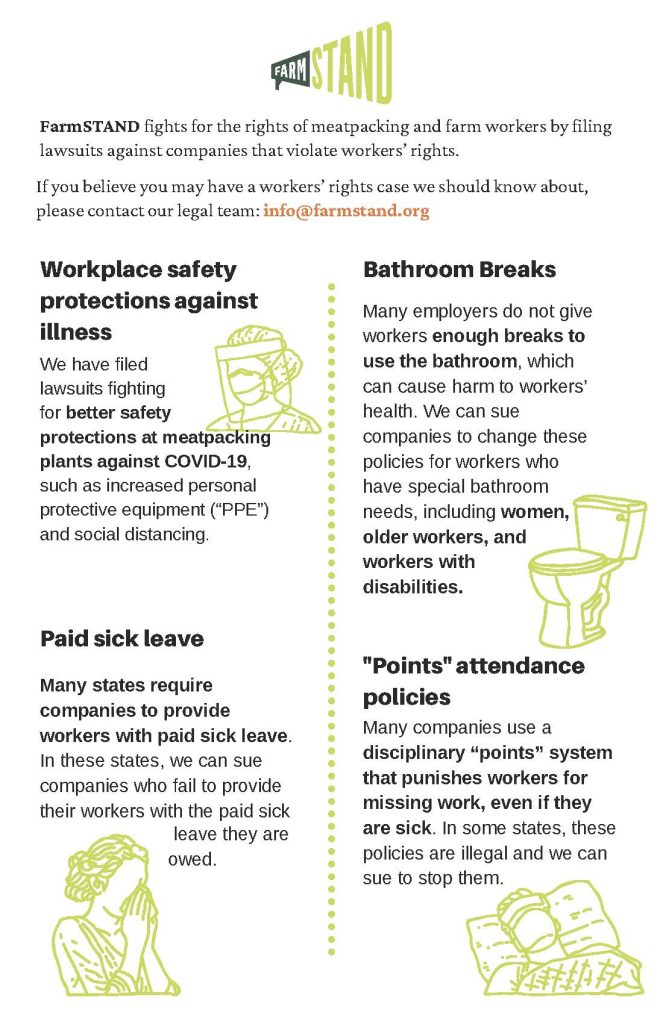
Because industries that depend on degrading and diminishing their workers are unacceptable and unsustainable, for years FarmSTAND has worked to inform meatpacking workers of their rights to challenge such policies—as well as other practices that expose workers to health and safety risks.
Title VII, which protects against discrimination based on sex, the Pregnancy Discrimination Act, and the Age Discrimination in Employment Act (ADEA) all prevent “disparate impacts.” That is, the laws allow employees to demand their employers not only treat them as individuals, rather than based on stereotypes, but also that workplace policies don’t favor one group over another, even if the employee can’t show the favoritism was purposeful.
Workers may also have rights to the bathroom under the Affordable Care Act or state laws. Although, unfortunately, the Occupational Safety and Health Administration’s guidance adds little, only vaguely calling for “prompt access to toilet facilities when needed.”
Supervisors are explicit that male employees are expected to pee in bottles to meet their quotas. Those bottles can be found filling the trash cans surrounding the dispatch centers.
However, because Leah has typical female anatomy, she could not rely on the same trick. Instead, on all of her runs she had to carry a Shewee and a change of clothes. The former was designed to help her funnel her urine and the latter was needed when the Shewee ultimately proved unsuccessful. Even with all of that, she was fired for failing to meet Amazon’s quotas.
Leah recognized a system that didn’t allow for breaks meant people like her were at a special disadvantage, and she sought a playing field that wasn’t determined by her anatomy. Leah turned to the Equal Employment Opportunity Commission (EEOC).
By statute, the EEOC helps workers investigate such claims. Workers are required to present their concerns to the EEOC before proceeding in court. And the EEOC gathers evidence, either enabling the agency to press the issue or assisting workers with their own case, helping offset workers’ relative lack of resources.
However, in September 2025, Trump officials ordered the dismissal of all disparate impact claims, including Leah’s. In policies across the federal government, the Trump Administration is acting on a tortured notion that the government preventing harm to a group is discriminatory against others, simply because they didn’t also suffer that same harm and thus don’t benefit from the change.
The Trump disciples at the EEOC say they cannot prevent biased policies unless the employer was inept enough to reveal it acted out of prejudice. This means that any discriminating employer who covers up malintent gets to escape accountability.
Assuming we’re successful, if the EEOC still won’t stand up for Leah, we’ll proceed on her behalf, using the information we were entitled to obtain through the EEOC.
Regardless of the outcome, FarmSTAND will continue to stand with workers as they insist they are humans worthy of respect and care. No shareholder or board member has the right to prioritize their income over the ability of workers to relieve themselves.
That means more legal actions like this one to help workers, and more storytelling that will shift what investors, consumers, and everyone is willing to accept in their food system. If meat can’t be produced without both human and animal blood on the floors, or packages can’t be dropped without urine dripping down the legs of the driver, then we need to replace the systems that make that the norm.