
By Amal Bouhabib
Senior Staff Attorney
In creatively cruel ways, President Trump is making good on his promise to carry out the largest mass deportation in history. Across the country, heavily armed federal agents in camouflage storm worksites, target worker activists, chain up workers like criminals, and tear them from their families, all under the banner of “restoring” jobs to American citizens.
Nowhere has this campaign landed with more force than in agriculture, a sector that depends overwhelmingly on immigrant labor — both documented and undocumented. In June, industry leaders reported that up to 70 percent of workers stopped showing up after ICE raids, leaving “crops rotting” and meatpacking plants understaffed. Trump himself has acknowledged this contradiction, calling for a pause on agricultural worksite raids to “protect our farmers” only to be overruled by his own Border Czar, who pledged to increase worksite enforcement by “four to five times.”

The administration insists these raids are necessary to rebuild an American workforce allegedly “stolen” by immigrants. Agriculture Secretary Brooke Rollins recently doubled down on this narrative, saying deportations in the food sector would proceed as the country moves toward “a 100 percent American workforce” — one bolstered by automation and, puzzlingly, Medicaid recipients. (This last remark baffled farmers as much as anyone else. For one, most Medicaid recipients already work, attend school, care for loved ones or live with illness or disability. As former Secretary of Agriculture Tom Vilsack put it: “farm work would be one of the last jobs a Medicaid recipient would seek.”)
The idea that deporting our food and factory workers will spark an American labor renaissance might be laughable if it weren’t so dangerous. Nothing is stopping Americans from applying for these jobs right now. After all, immigrants don’t hire themselves. And U.S. citizens face none of the legal or logistical barriers undocumented or newly arrived workers must navigate.
So why don’t Americans take these jobs? Because Big Ag doesn’t want them to.
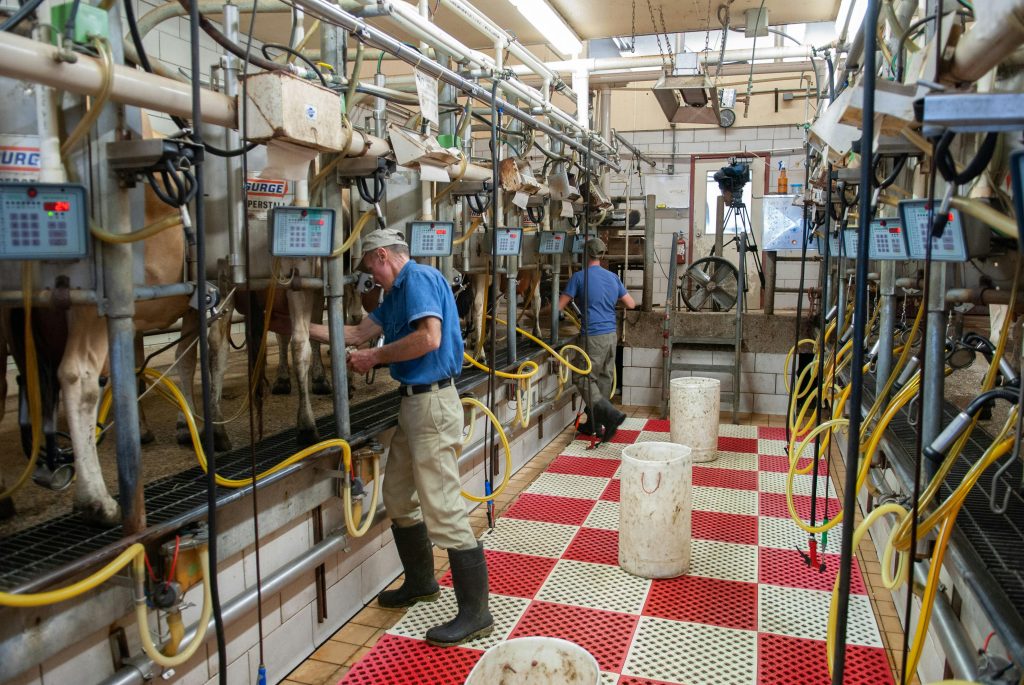
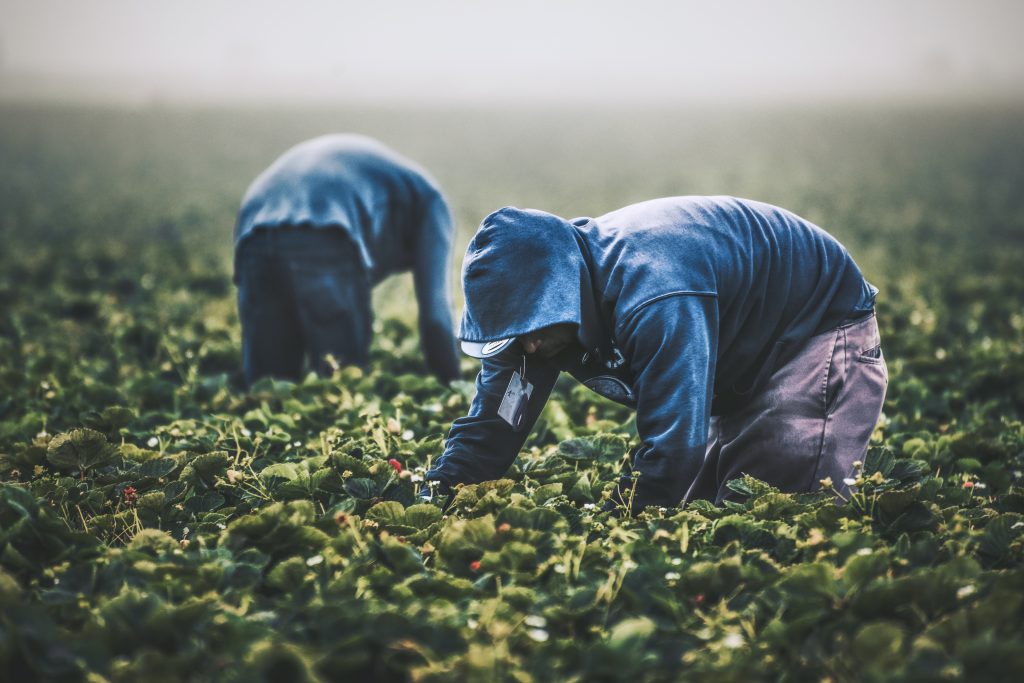
From fields to factories, Big Ag jobs are brutal, underpaid, physically demanding, and, in a world of climate change and industrialized farming, increasingly life-threatening. Agricultural labor, rooted in a legacy of slavery, remains exempt from many basic protections: no overtime pay, no workers’ compensation, and in many states, not even the right to unionize. In much of the U.S., farmworkers can still legally be paid as little as $7.25 an hour. Decades of advocacy have led to few reforms – because growers and their political allies fight to keep it that way.
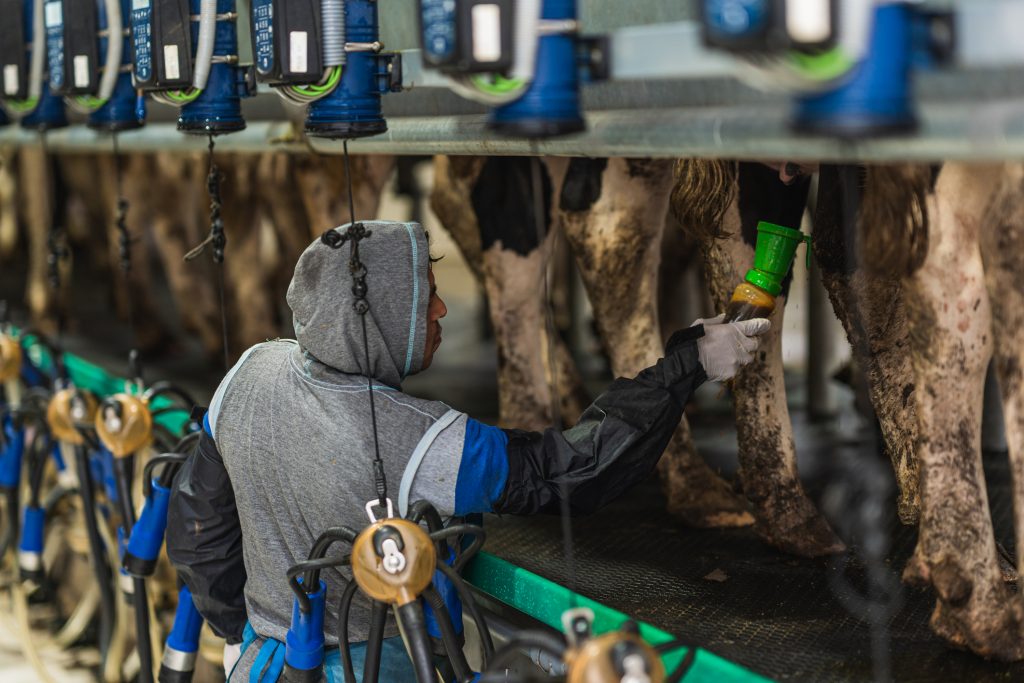
Factory farming jobs may offer shelter from the sun and marginally better wages, but they come with their own horrors: life-altering injuries, punishing schedules, and high rates of physical and psychological trauma. These conditions have made the meatpacking industry one of the most dangerous and high-turnover sectors in the country.
With unemployment near record lows, few Americans are desperate enough to take these jobs for long. And that’s exactly how Big Ag likes it.
The H-2A visa program proves the point. Created in 1986, the program lets farms hire foreign seasonal workers, but only after offering the same jobs to U.S. workers at a federally mandated wage — often well above the minimum. This year, apple pickers in Oregon can earn $19.82 an hour; berry pickers in Florida, $16.23. Still, Americans aren’t applying. From 2005 and 2024, the number of H-2A workers skyrocketed from 48,000 to over 385,000, with growth across nearly every state and sector, including labor-intensive crops like tobacco and sugarcane.
Despite some increases in hourly wages, it remains near-impossible to get Americans to want to work in scorching temperatures, for days on end, without benefits or breaks. FarmSTAND is fighting to defend Biden-era workplace protections, but the Trump administration has already vowed to undo them.
H-2A visas are not available for factory farming or meatpacking because those jobs are year-round, not seasonal, something Big Ag has been trying to change for years. But they don’t employ U.S. citizens any more than crop farmers do. Instead, they rely on undocumented immigrants and refugees and increasingly exploit visas intended for other purposes – like the J-1 “cultural exchange” and TN professional visas – to fill low-wage, low-skill roles.
The history of ICE raids since its founding in 2003 exposes the hollowness of the “Americans want these jobs” myth. If it were true, these raids would lead to economic revival, local hiring booms, and wage increases. They don’t.
After a 2006 ICE raid took 250 workers from a Swift meatpacking plant in Grand Island, Nebraska, the company struggled for months to fill the jobs, eventually turning to Somali refugees. In 2019, after 680 poultry workers were detained in Mississippi, a wave of Americans briefly applied — many quit within days. Some jobs were ultimately refilled by the same detained workers after their release.
Raids haven’t revitalized local economies. They’ve devastated them. In Postville, Iowa, when 389 workers were arrested in a 2008 raid, nearly 20% of the town’s population disappeared overnight. The local economy cratered, and the community, including those not directly affected by the raid, was traumatized. This pattern repeats wherever ICE strikes.
COVID exposed the same truth. As the virus ripped through meatpacking plants (after Big Ag lobbied to keep lines running and cut safety protocols) it was foreign-born workers from Haiti, the Congo, Myanmar, Bosnia, Mexico, and beyond who bore the brunt. Many returned to fill the void. Tragically, so did children.
Between 2015 and 2022, the number of minors illegally employed in slaughterhouses nearly quadrupled. Just last year, a DOJ investigation found children as young as 13 working at a slaughterhouse supplying Tyson and Perdue. Some were killed operating machinery they never should have been near.
ICE raids don’t help American workers. They’re even bad for business. Businesses lose workers and scale back or move away; local shops suffer from reduced spending. Economists estimate that, for every million immigrant workers removed, 88,000 U.S. workers lose jobs.
If this were truly about protecting American labor, you’d expect a crackdown on abusive employers. Instead, we see mass deportations — including of children — and workers locked in private immigration prisons with names like “Alligator Alcatraz.” Meanwhile, industry giants like JBS — the world’s largest beef producer and a top Trump donor — lobby to roll back safety regulations and labor protections.
And state lawmakers are helping them. As deportations ramp up and hundreds of thousands of immigrants lose legal status, states like Florida are preparing for the fallout not by recruiting Americans, but by weakening child labor laws and eliminating heat protections. In Iowa, teens as young as 14 can now work in meat coolers. 15-year-olds can toil on assembly lines with dangerous machinery.
The idea that deportations will lead to a resurgence of American farm and factory labor is not just wrong — it’s a lie. It was never about protecting American workers. It’s about protecting Big Ag’s ability to exploit a vulnerable workforce.
If the administration truly cared about putting Americans to work, it would raise wages, improve conditions, and hold employers accountable—not deport the people who keep us fed and replace them with children.
Until then, FarmSTAND is fighting to shut down the illegal exploitation of laborers who put food on our tables, despite the monstrous conditions industrial ag puts them through to do it.